
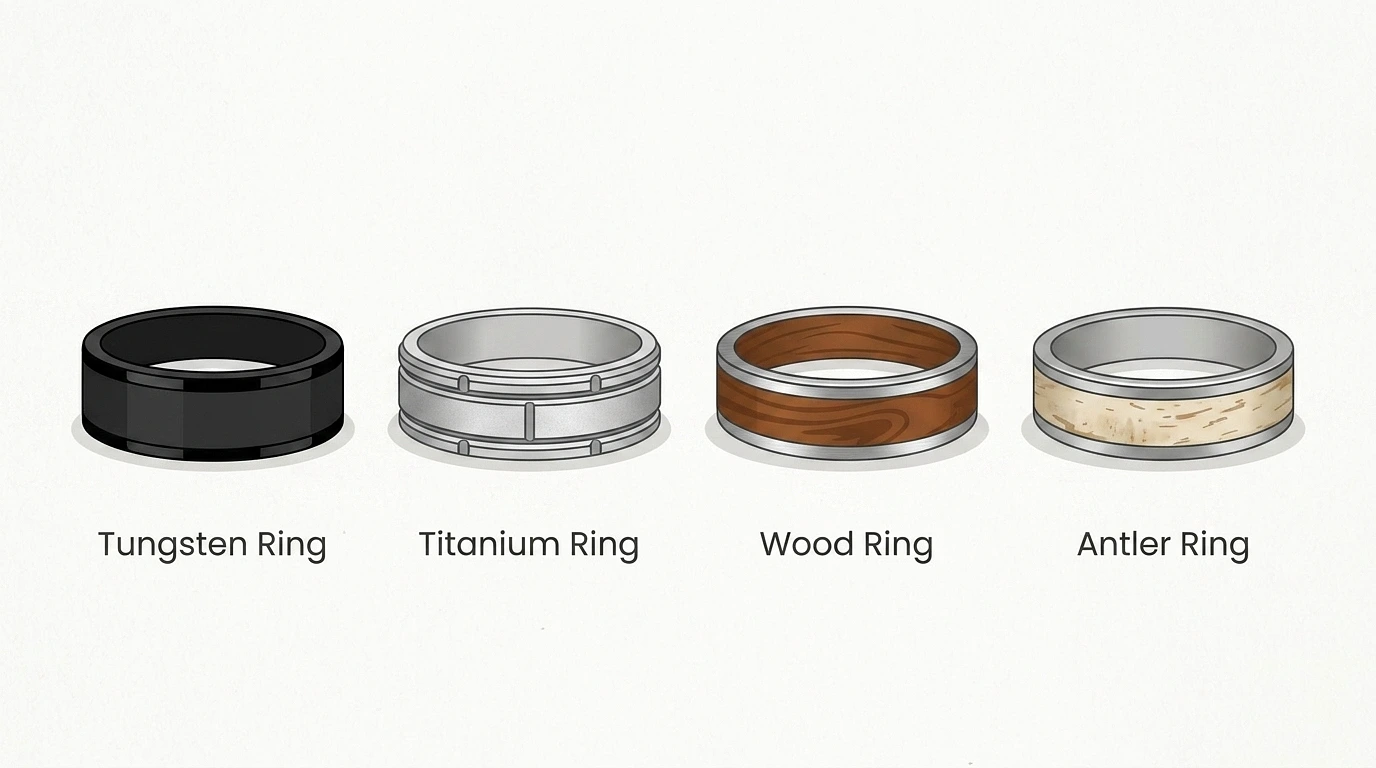
Tungsten is the toughest against scratches but can crack on a hard floor. Titanium is feather-light and bend-resistant, but it picks up scratches fast. Wood and antler look like nothing else on a finger, but they need babying and won’t survive years of daily abuse. None of these four can be properly resized, and most “lifetime warranties” only swap your ring out, they don’t fix it. For most guys, silver tungsten is the smartest buy under $100. But if you want a ring you’ll still wear in forty years, gold or platinum is the only honest answer.
Shopping for a men’s ring sounds easy until you actually start reading product pages. Every brand promises the perfect material. Every metal is “the strongest.” Every ring is “built for life.” Then a year goes by, the finish dulls, the inlay cracks, and suddenly the warranty has more loopholes than a tax code.
1. Tungsten Cracks. It Doesn’t Bend.
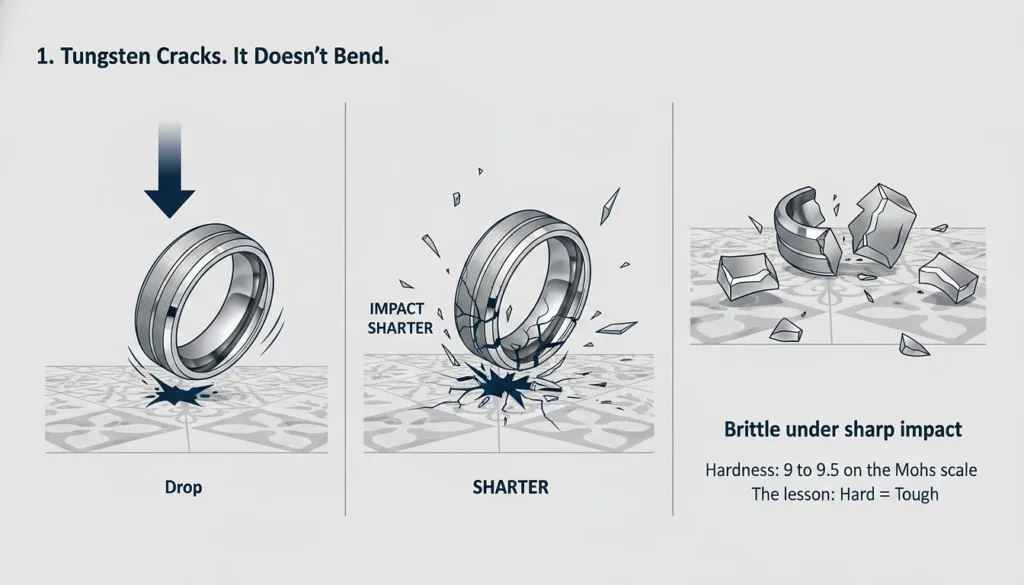
Drop a tungsten ring on a tile floor and it can break apart like a coffee mug. Brands spin this as a safety feature, the ring snaps off your finger in an accident instead of crushing it. That’s true. What they leave out is that the same thing happens if you knock it off the bathroom counter.
- Hardness: 9 to 9.5 on the Mohs scale, harder than steel.
- The catch: Brittle under sharp impact.
- The lesson: Hard and tough are not the same thing.
2. Titanium Scratches. A Lot.
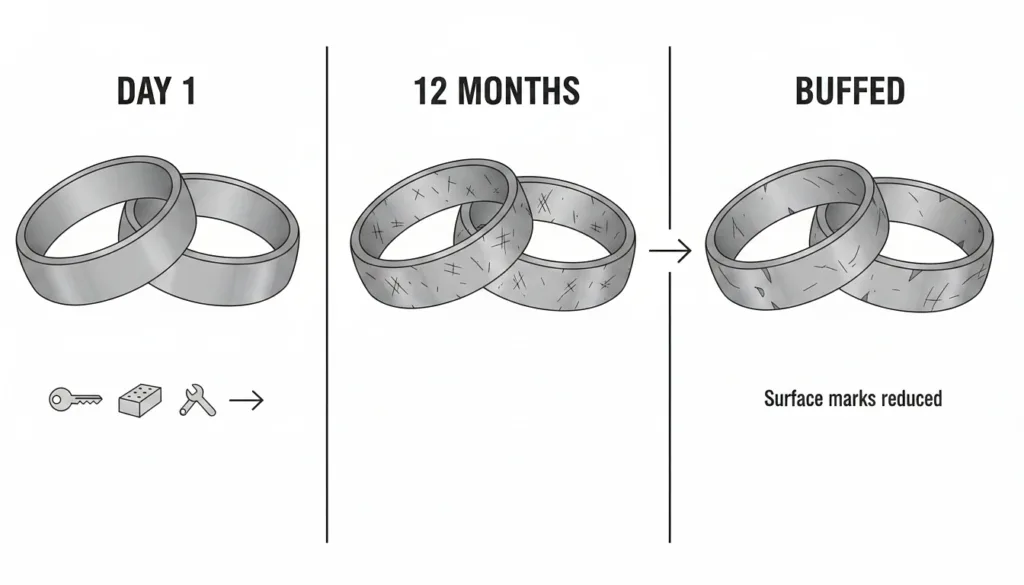
Titanium ranks around 6 on Mohs. That sounds fine until you realize stainless steel, car keys, gym equipment, gravel, and concrete all sit higher. Daily life beats it up. Most listings show day-one studio shots. You won’t find the two-year update photo anywhere.
- Scratches from: Steel tools, keys, concrete, gravel, even some glass.
- After 12 months: Visible scuffs and dulling.
- Buff-out option: Yes, but only for surface marks.
3. Neither Tungsten Nor Titanium Can Be Resized.
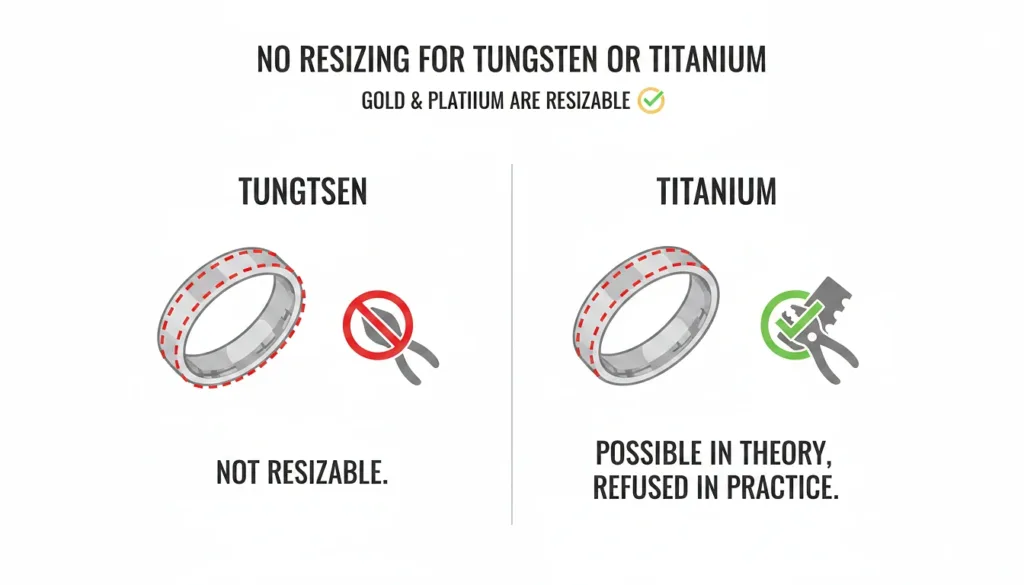
If your finger gets bigger, smaller, or just changes with age, you’re buying a new ring. Gold and platinum get resized in any jewelry shop. Tungsten is too hard to cut and reshape. Titanium is technically possible, but most jewelers won’t touch it because the tools wear out fast and the labor isn’t worth it.
- Tungsten: Not resizable.
- Titanium: Possible in theory, refused in practice.
- Plan for: A full replacement, not an alteration.
4. “Hypoallergenic Tungsten” Often Hides Nickel.
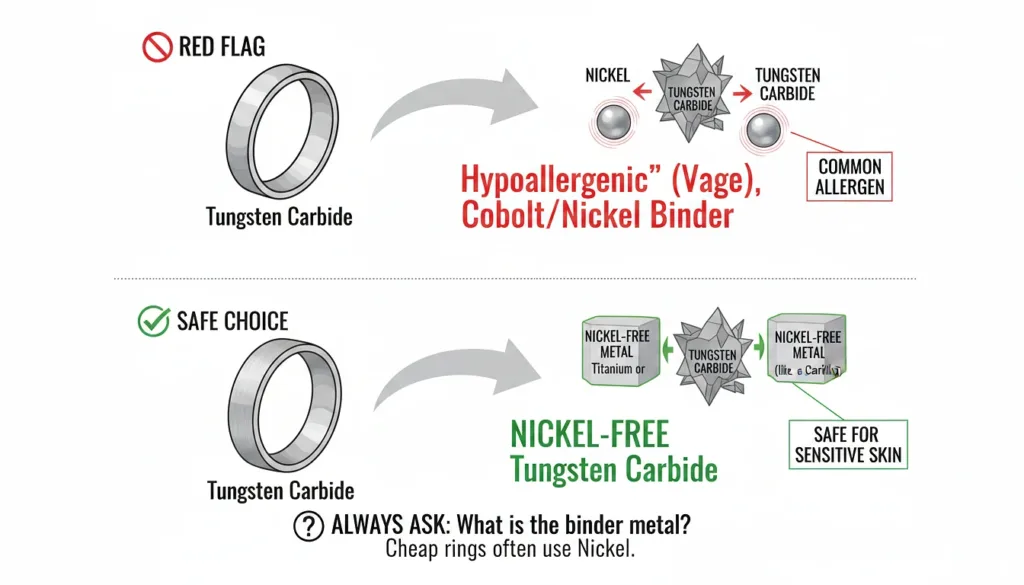
Tungsten carbide is bound with another metal, usually cobalt or nickel. Nickel is the most common metal allergy on the planet. When a listing says “hypoallergenic” without naming the binder, assume cobalt at best, nickel at worst. Cheap rings almost always use nickel.
- Always ask: What is the binder metal.
- Safe answer: Nickel-free tungsten carbide.
- Red flag: No clear answer or a vague “it’s safe for sensitive skin”.
5. Wood Rings Are Not Waterproof. They’re Water-Resistant, Which Is Different.
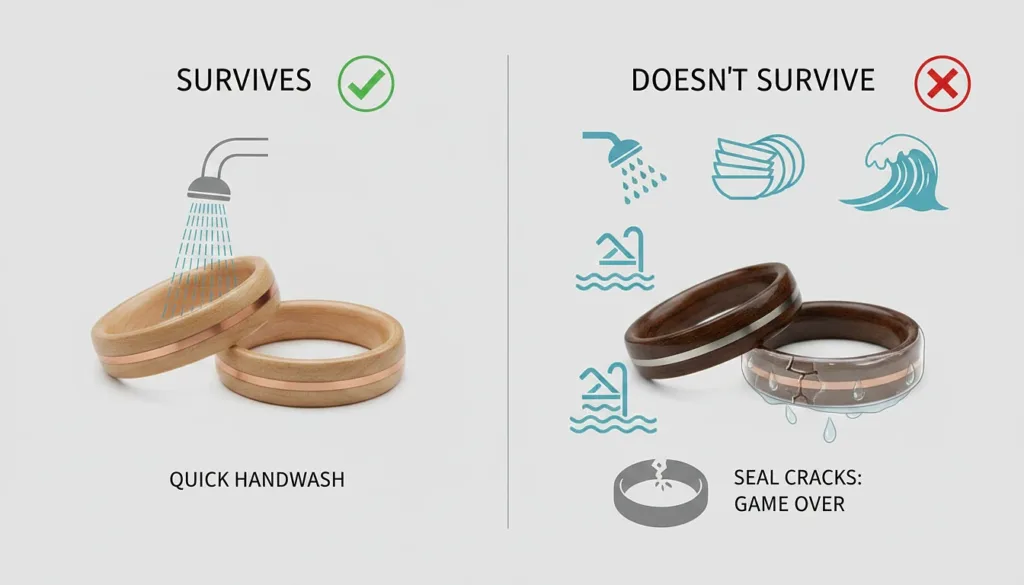
Sealed wood handles a quick handwash. It does not handle a hot shower, a dishwashing session, a chlorinated pool, or saltwater. Water creeps under the resin, the wood swells, the seal fractures from the inside, and the ring is finished. The marketing copy usually says “waterproof.” The care guide buried at the bottom of the page tells the truth.
- Survives: Quick handwashing.
- Doesn’t survive: Showers, dishes, swimming, ocean.
- Once the seal cracks: Game over.
6. Antler Rings Are Bone, and Bone Is Porous.
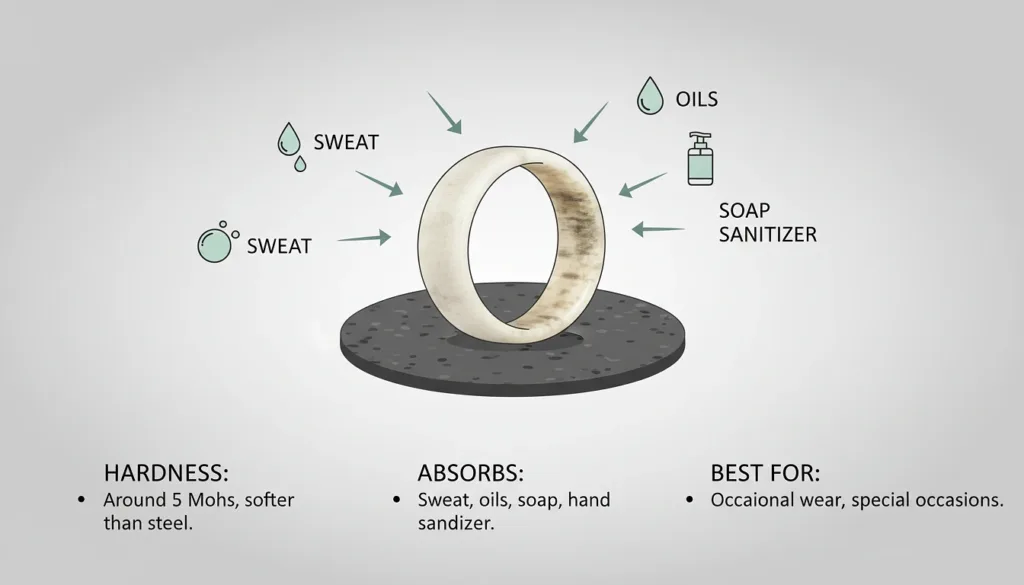
Deer and elk antler sit around 5 on the Mohs scale, softer than most metals you’ll touch in a day. Antler soaks up sweat, soap, lotion, and skin oil. Over time the resin coat bubbles or peels. A fully carved antler ring is wearable art, not a daily-driver wedding band. Sellers know this. The product page rarely says it.
- Hardness: Around 5 Mohs, softer than steel.
- Soaks up: Sweat, oils, soap, hand sanitizer.
- Best fit: Occasional wear, special occasions.
7. Black, Blue, Gold, and Rose Gold Tungsten Rings Are Plated, Not Solid.
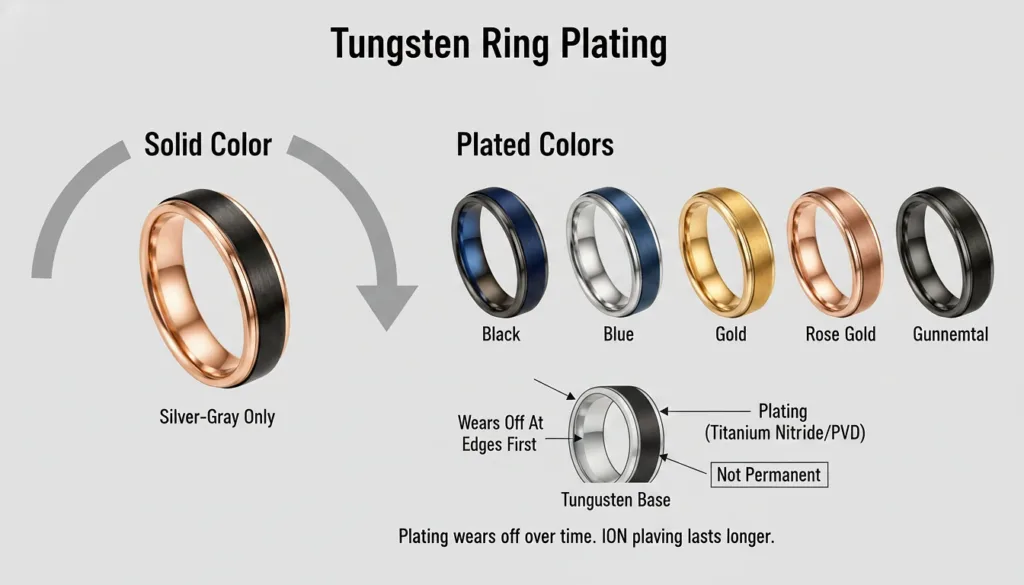
The only color tungsten comes in naturally is silver-gray. Every other shade is a coating, usually titanium nitride or PVD. The plating wears off at the edges first, then anywhere your finger rubs against something. ION plating lasts noticeably longer than standard plating, but nothing plated is permanent.
- Solid color: Silver-gray only.
- Plated colors: Black, blue, gold, rose gold, gunmetal.
- Best plating method: ION plating, ask before you buy.
8. The $39 Ring and the $300 Ring Often Come From the Same Factory.
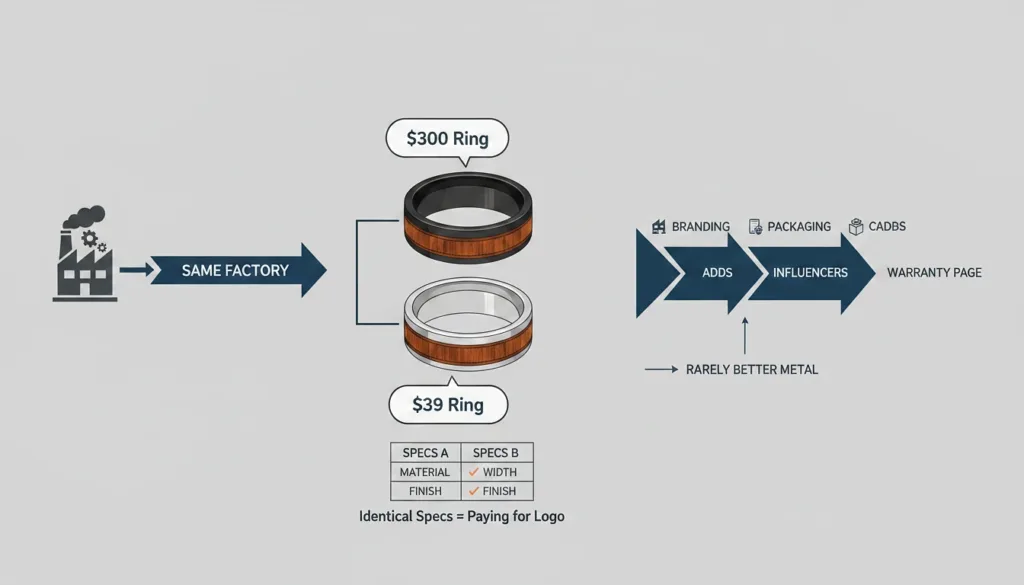
A huge chunk of tungsten and titanium rings sold online come out of the same handful of factories in China and Southeast Asia. The price difference pays for branding, packaging, ads, influencer deals, and that lifetime warranty page. It rarely pays for better metal. Compare the actual specs side by side. If two rings list the same material, width, and finish, you’re paying for the logo.
- Compare: Specs, not slogans.
- Same specs usually means: Same ring, different sticker.
- You’re paying for: Marketing, returns, brand trust.
9. “Lifetime Warranty” Usually Means Lifetime Replacement, Not Lifetime Repair.
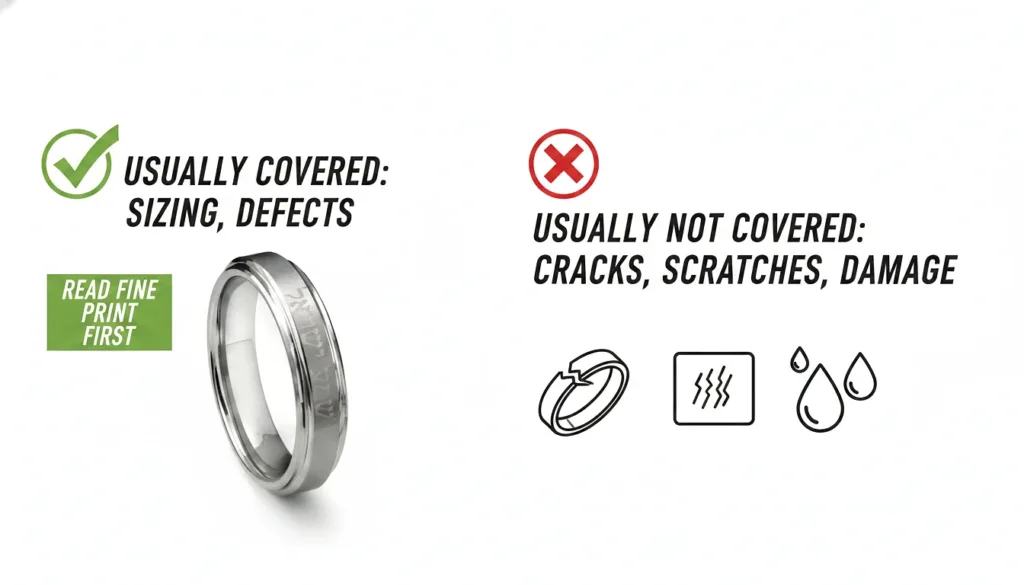
Read the warranty page, not the homepage banner. Most cover sizing swaps and factory defects. Almost none cover cracks, shattered tungsten, scratched plating, damaged inlays, or normal wear. “Lifetime” sounds generous right up until the moment you actually need it.
- Usually covered: Resizing swaps, manufacturing defects.
- Usually not covered: Cracks, scratches, worn plating, broken inlays, water damage.
- Do this first: Read the fine print before you check out.
Here’s the truth nobody in this industry will tell you outright: the materials aren’t the real problem. The marketing is. Tungsten, titanium, wood, and antler all have a place. They all have honest trade-offs. The issue is that brands sell every option as if it has no downsides, and the downsides only show up after the return window closes.


About author

Add comment