
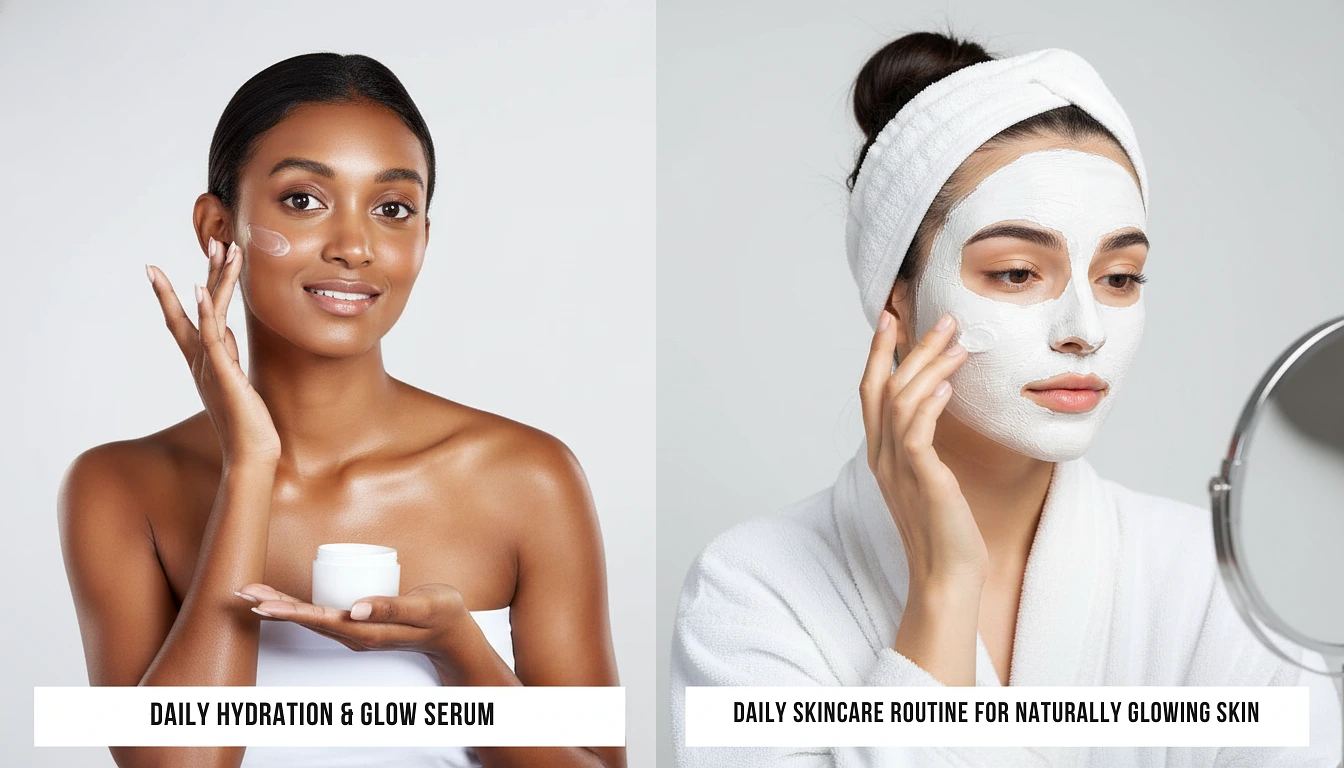
Glowing skin isn’t the mystery the internet has convinced everyone it is. After years of trying things, getting it wrong, and slowly piecing together what actually works, I can tell you it boils down to five things. A gentle cleanser. Vitamin C in the morning. Sunscreen please, never skip it. Retinol or an exfoliant a few nights a week. And steady hydration.
Stay consistent, sleep enough, drink your water, eat halfway decent & somewhere around the one or two month mark, something quietly shifts. Your skin starts looking healthier on its own, almost like it’s been waiting for you to stop overcomplicating things. No 12-step routine. No drawer of forgotten $80 serums. Just the basics, done daily.
Morning Routine Protect and Brighten
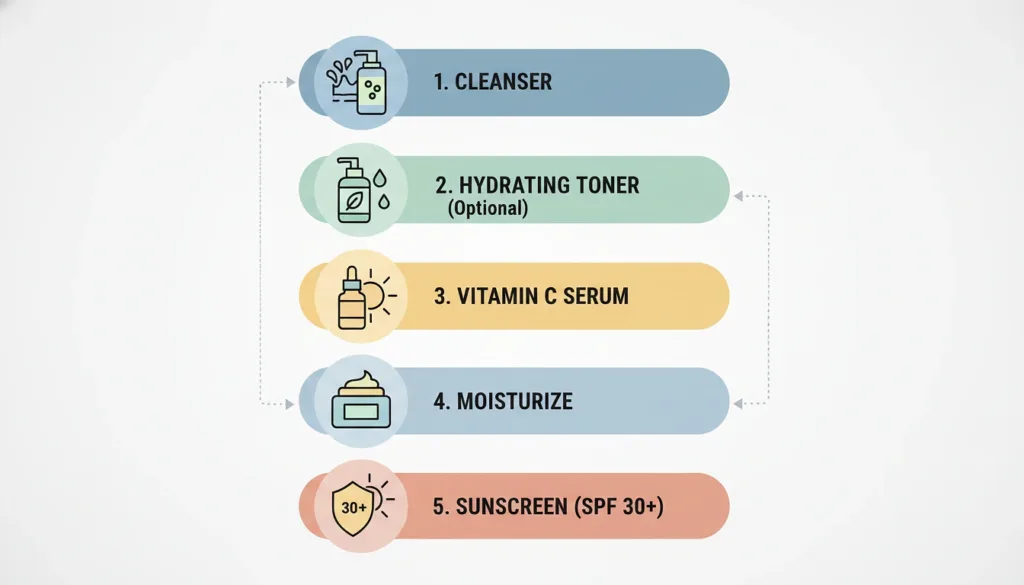
Your morning routine has one job, get your skin ready for whatever the day’s about to throw at it.
- Gentle Cleanser Splash some lukewarm water on your face and use a mild, sulfate-free cleanser to clear off the oil and product residue from overnight. Then pause and notice how your skin feels. If it’s tight, or has that squeaky-clean feeling people somehow learned to love, your cleanser is too harsh. That tightness isn’t “deep clean” it’s your skin telling you it’s been stripped. And it’ll fight back, with more oil, more irritation, and a dull, tired look that creeps in over weeks.
- Hydrating Toner or Essence (Optional) A toner with rose water, glycerin, or hyaluronic acid is basically a sip of water for your skin a quick burst of moisture that helps everything else absorb better. Just stay away from anything with alcohol. It’ll dry you out before lunch and leave your skin worse than where you started.
- Vitamin C Serum Now we’re at the glow step, and this is where things get fun. Vitamin C brightens dullness, fades dark spots, helps your skin produce more collagen, and quietly defends against pollution and free radicals all day. Look for 10–20% L-ascorbic acid. If your skin runs sensitive, gentler forms like sodium ascorbyl phosphate or magnesium ascorbyl phosphate do the same work without the sting.
- Moisturizer Every skin type needs moisturizer. Yes even oily skin. Especially oily skin. Here’s the frustrating little catch: when your skin is dehydrated, it panics and pumps out more oil to compensate. Which gives you exactly the shine and breakouts you’re trying to dodge. If you’re oily, go for a lightweight gel. Dry? Reach for something richer with ceramides or squalane.
- Sunscreen (Please, Don’t Skip This) If you take only one thing from this article, let it be this: wear sunscreen every single day. Roughly 80% of how aged your skin looks down the road comes from sun exposure the dullness, the dark spots, the fine lines, all of it. SPF30 or higher. No exceptions. Cloudy day? Wear it. Staying indoors? UVA rays sail right through your windows like they own the place. Outside for a while? Reapply every couple of hours. Future you will thank present you.
Evening Routine Repair and Renew
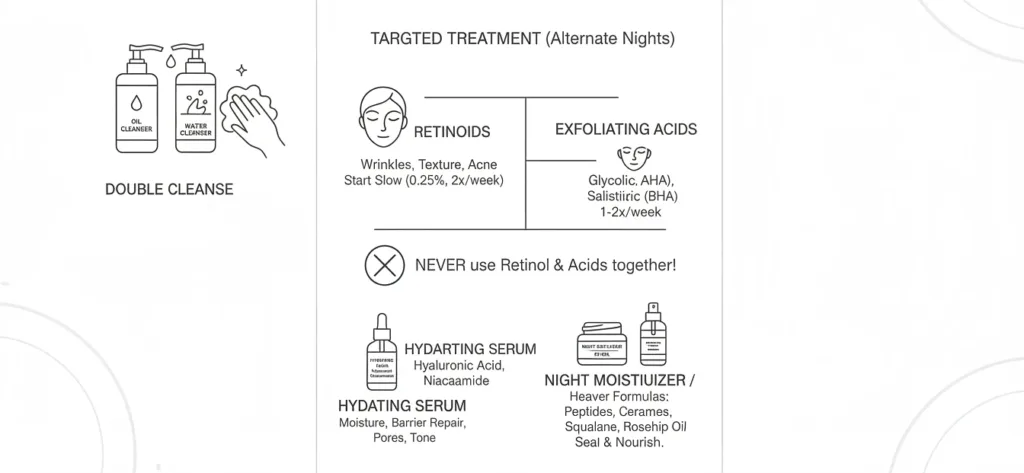
Nighttime is when your skin actually does its repair work. Your job in the evening is mostly to get out of its way and give it what it needs.
- Double Cleanse Start with an oil-based cleanser or micellar water to melt away sunscreen, makeup, and the day’s oil. Follow with a gentle water-based cleanser to wash off sweat and anything left behind. If you wore SPF or makeup, one cleanse rarely cuts it. Two feels almost ceremonial after a long day.
- Targeted Treatment (Alternate Nights) Here’s where you go after specific concerns. You’ve basically got two paths.
Retinoids retinol, retinaldehyde, tretinoin are the absolute gold standard for wrinkles, texture, and acne. But please, start low and slow. A 0.25–0.3% concentration, twice a week, and build up as your skin adjusts. Going too hard out of the gate is how you end up with a red, peeling, miserable face that makes you swear off skincare for months.
Exfoliating acids do something different. Glycolic acid (an AHA) sweeps away dead skin cells and brightens beautifully. Salicylic acid (a BHA) gets into your pores and clears them out. One or two nights a week is plenty.
One cardinal rule: never, ever use retinol and acids on the same night. Together, they can wreck your skin barrier in record time.
- Hydrating Serum A serum with hyaluronic acid or niacinamide brings moisture back and helps repair your skin barrier especially important when you’re using stronger actives that put your skin through it. Niacinamide pulls double duty by minimizing pores and evening out your tone over time. It’s a quiet workhorse.
- Night Moisturizer or Face Oil Go heavier at night. There’s no sunscreen layered on top, so your skin can really drink things in. Look for peptides, ceramides, squalane, or rosehip oil. They work alongside your skin’s overnight repair process and seal in everything you’ve layered before. You’ll wake up to softer, calmer skin.
Weekly Extras
A hydrating sheet mask once a week feels amazing there's something almost meditative about lying still for fifteen minutes with your face soaked in serum. A clay mask helps if you break out often or feel congested. But these are nice extras, not staples. They won't save you if you're skipping the basics.The Lifestyle Side of Glowing Skin
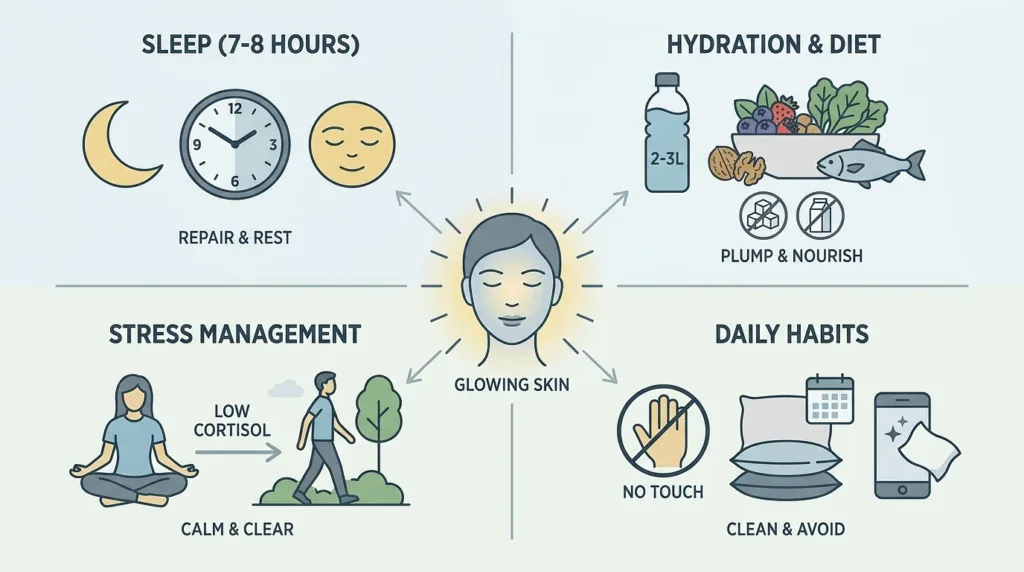
Here’s the part most skincare articles awkwardly tiptoe around: your products can only take you so far. How your skin looks has just as much to do with how you live as what’s sitting on your bathroom counter.
Sleep is huge. Aim for 7 to 8 hours. Your skin does most of its repair work while you’re out, and you can spot a sleep-deprived face from across a room dull, puffy, shadows under the eyes. You know the look. You’ve had it.
Drink your water. Two to three liters a day keeps your skin plump and helps your body clear out waste. And eat well berries, leafy greens, nuts, fatty fish. It all feeds your skin from the inside in ways no serum ever could. Too much sugar or dairy, on the other hand, can quietly sabotage you if you’re acne-prone.
Stress is another sneaky one. High cortisol breaks down collagen and triggers breakouts right when you can’t afford them. Even ten minutes of walking or deep breathing a day makes a visible difference. And don’t underestimate the small stuff. Stop touching your face. Change your pillowcase weekly. Clean your phone screen it’s grosser than you want to know.
Be Patient. Truly.
Skin cells turn over roughly every 28 days, so give any new product 4 to 6weeks before you write it off. And honestly? More isn’t better. A simple routine you actually follow every day will always beat a fancy one you do half the time. If you’re battling something stubborn like cystic acne, melasma, or rosacea, just go see a dermatologist. They’ll save you years of guesswork and so much frustration.
The Bottom Line
That “glow” everyone’s chasing? It’s really just skin that’s healthy, hydrated, and protected. Master the basics, give it time, and let your skin do the rest.


About author

Add comment