
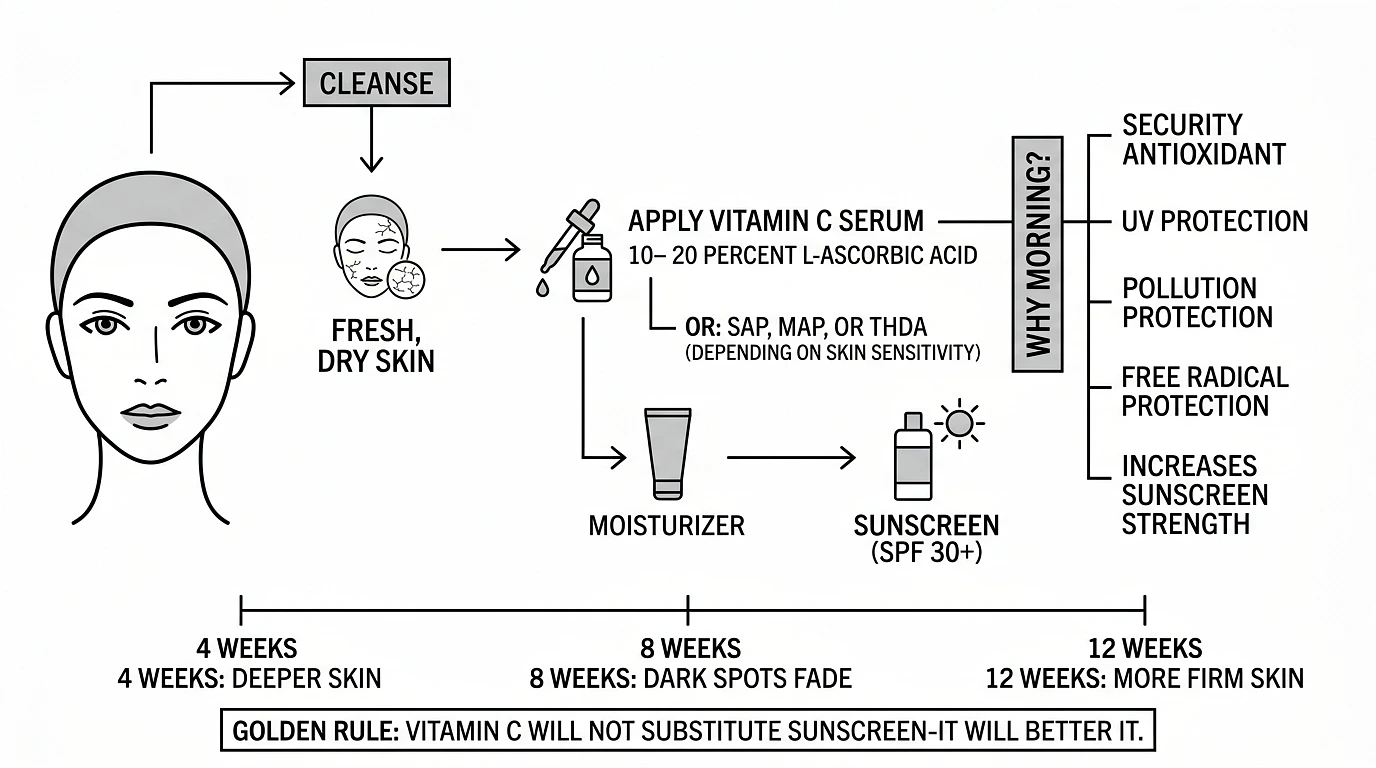
Use vitamin C serum every morning on fresh, dry skin after which use moisturizer and sunscreen (SPF 30+). The morning is the best time to apply the vitamin C since it is a security antioxidant that protects your skin against UV, pollution and free radicals all day and also increases the strength of your sunscreen. Regularly you can anticipate deeper skin after 4 weeks, dark spots fade after 8 weeks and more firm skin after 12 weeks. They can be used at 10- 20 percent L-ascorbic acid, though, depending on the sensitivity of the skin, which is why SAP, MAP, or THDA may be used. Keep in mind the golden rule: vitamin C will not substitute sunscreen–on the contrary it will better it.
Why Morning Beats Night for Vitamin C
Vitamin C is a shield, not a repair tool. Your skin faces its biggest threats during the day UV rays, pollution, smoke, and blue light. These create free radicals that damage collagen and trigger dark spots. Vitamin C neutralizes these free radicals before they cause damage. Using it at night is like wearing armor to bed when the battle is outside.
Vitamin C is the most abundant antioxidant naturally found in your skin. Research from the Linus Pauling Institute confirms it’s 15 times more concentrated than glutathione and 200 times more than vitamin E.
The problem? UV exposure and aging deplete it quickly. Topical vitamin C refills this defense system.
Your skin already uses vitamin C to protect itself. You’re just giving it more.
Vitamin C + Sunscreen = Skincare’s Best Duo
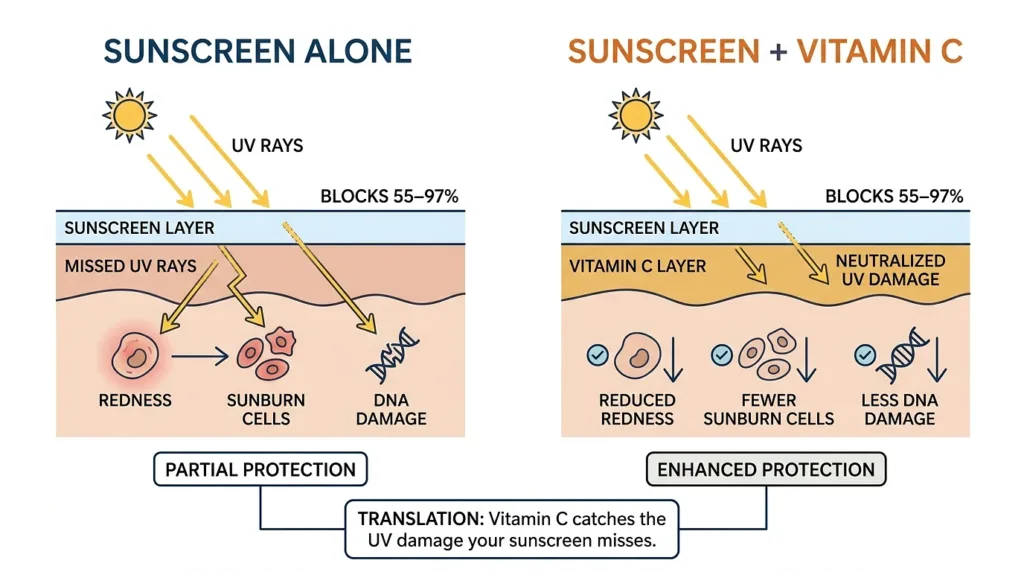
Here’s what most people miss: sunscreen alone isn’t enough.
Even the best sunscreen blocks only 55–97% of UV rays. Some always slip through.
A major study in the Journal of the American Academy of Dermatology found that 15% L-ascorbic acid combined with 1% vitamin E significantly reduced redness, sunburn cells, and DNA damage from UV exposure.
Vitamin C catches the UV damage your sunscreen misses.
Why Night Is Wrong for Vitamin C (But Right for Other)
Nighttime is your skin care repair window. Save it for ingredients that do the repairing:
- Retinol – boosts cell turnover.
- Peptides – rebuild collagen.
- Rich moisturizers – restore the barrier.
Mixing vitamin C with retinol in the same routine often causes irritation. Separating them by time of day solves this problem.
| What You’ll See | Your Morning Routine |
|---|---|
| Skin looks brighter. Makeup applies more smoothly. | Cleanse with a pH-balanced cleanser. |
| Dark spots fade. Vitamin C blocks tyrosinase, the enzyme that creates pigmentation. | Dry completely. Wet skin reduces absorption. |
| Fine lines soften. Collagen production improves. Skin feels firmer. | Apply 3–4 drops of vitamin C. Press into skin. Wait 60 seconds. |
| Patience is key. Commit to 90 days. | Moisturize with a suitable product. |
| Apply sunscreen with SPF 30+ minimum. | |
| Five steps, under five minutes. |
Choose the Right Vitamin C for Your Skin
Normal to oily skin: 10–20% L-ascorbic acid. The most researched, most effective form.
Sensitive skin: Start with derivatives sodium ascorbyl phosphate (SAP), magnesium ascorbyl phosphate (MAP), or tetrahexyldecyl ascorbate (THDA). These work at a gentler pH.
Mature skin: Look for vitamin C + vitamin E + ferulic acid. This combination multiplies antioxidant strength.
Always patch test behind your ear for 2–3 days before full application.
How to Tell If Your Serum Has Gone Bad
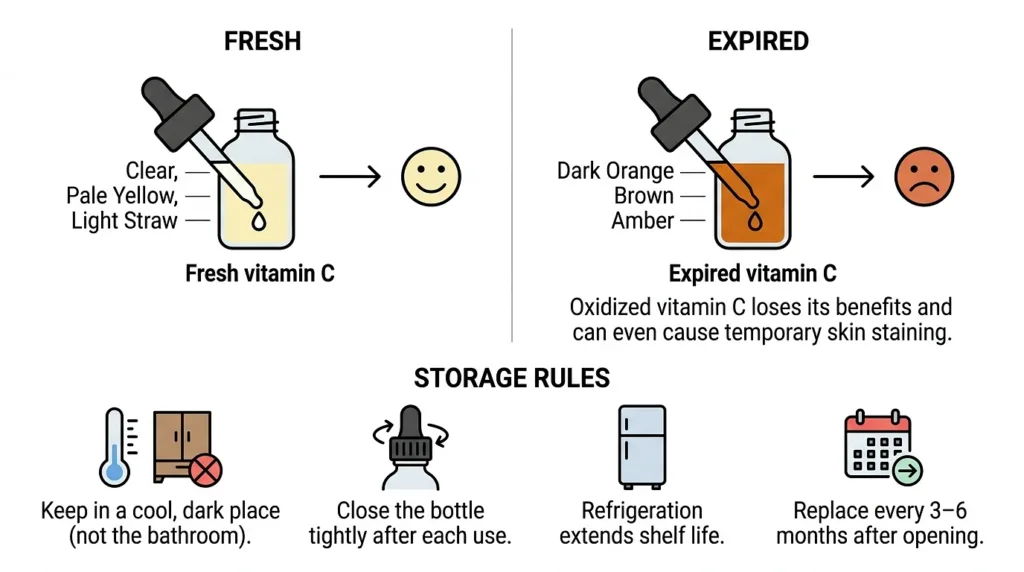
Fresh vitamin C: Clear, pale yellow, or light straw color.
Expired vitamin C: Dark orange, brown, or amber.
Oxidized vitamin C loses its benefits and can even cause temporary skin staining.
Storage rules:
- Keep in a cool, dark place (not the bathroom).
- Close the bottle tightly after each use.
- Refrigeration extends shelf life.
- Replace every 3–6 months after opening.
Ingredients to Avoid Mixing With Vitamin C
Avoid using these in the same routine:
- Benzoyl peroxide – instantly oxidizes vitamin C.
- Strong AHAs/BHAs – together they can irritate.
- Retinol – use at night, not morning.
Safe pairings: Hyaluronic acid, niacinamide, vitamin E, ferulic acid.


About author

Add comment