
I’ve wasted an embarrassing amount of money on Moisturizer over the years. Bottles that promised glowing skin and gave me breakouts instead. Pricey jars that left my face greasy by noon. Drugstore picks that made my skin feel tight and itchy within an hour.
If you’ve been through the same thing, you’re in the right place. And trust me, you’re not alone.
Walking into a Target skincare aisle or scrolling through Sephora feels like being handed a menu in a language you don’t speak. Every product claims to hydrate, plump, and transform your skin overnight. Half the ingredients sound like a chemistry exam.
What Are the Different Types of Facial Moisturizer?
When I first started paying attention to skincare, I had no idea why some products felt so different on my skin. Turns out, texture matters just as much as ingredients.
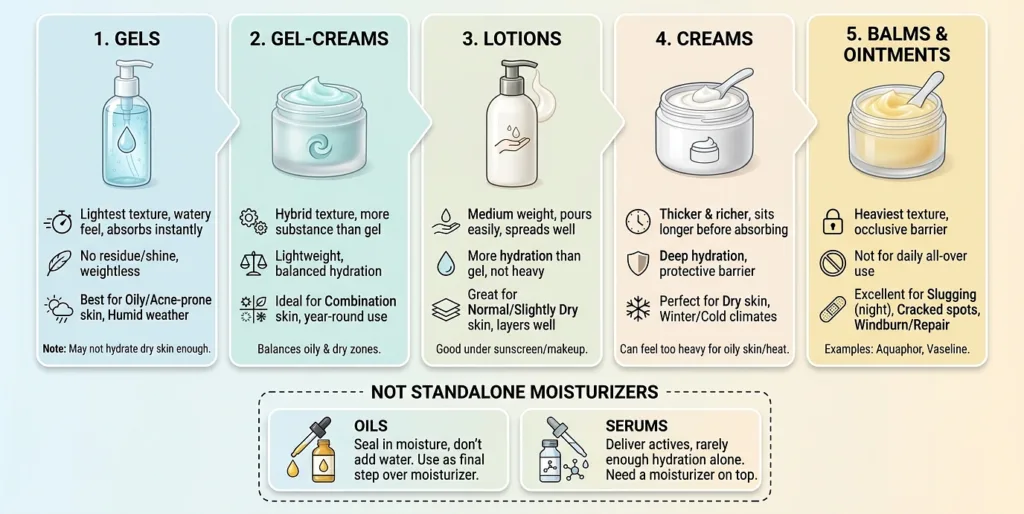
- Gels are the lightest option out there. They feel watery, almost like a thick serum, and soak into your skin within seconds. No residue. No shine. No heavy feeling.
If you have oily or acne-prone skin, gels will feel like a dream. They’re also amazing for humid weather or hot summer months. The downside? If your skin is genuinely dry, a gel alone probably won’t hydrate you enough.
- Gel-creams are the best of both worlds. They’ve got a little more substance than a gel but still feel lightweight.
These are my personal favorite for combination skin care. They don’t overwhelm the oily parts but still give enough moisture to the drier spots. A lot of people can wear gel-creams year-round and never need anything else.
- Lotions sit in the middle of the weight scale. They pour out of a bottle or pump, spread easily, and give more hydration than a gel without feeling heavy.
If your skin is normal or slightly dry, a good lotion is probably all you need. They layer well under sunscreen and makeup too.
- Creams are thicker and richer. They usually come in jars or squeeze tubes and sit on your skin longer before soaking in.
Dry skin genuinely loves a good cream, especially during winter or in low-humidity climates. The trade-off is they can feel too heavy for oily skin or hot weather.
Balms and ointments are the heavy artillery. Think Aquaphor, CeraVe Healing Ointment, or plain old Vaseline.
You’re not usually wearing these as everyday moisturizer, but they’re incredible for:
- Slugging at night (a thin layer over your regular cream to lock in moisture).
- Patching up dry cracked spots.
- Rescuing skin that’s been through windburn or over-exfoliation.
Oils and facial serums often get grouped in with moisturizers, but they’re not actually moisturizers on their own.
Oils seal in moisture that’s already there, but they don’t add water to your skin, which is what real hydration needs. If you love using oils, think of them as a final sealing step over a proper moisturizer, not a replacement.
Serums are a whole different category. They deliver active ingredients but rarely provide enough hydration to stand alone.
How Do I Choose a Moisturizer for My Skin Type?
This is where most people get it wrong, and I was one of them for years. They buy based on the pretty bottle, a friend’s recommendation, or an influencer’s review, and their skin pays the price.
Your skin is unique to you. The only way to pick the right moisturizer is to start with what you actually have, not what you wish you had.
For Oily Skin
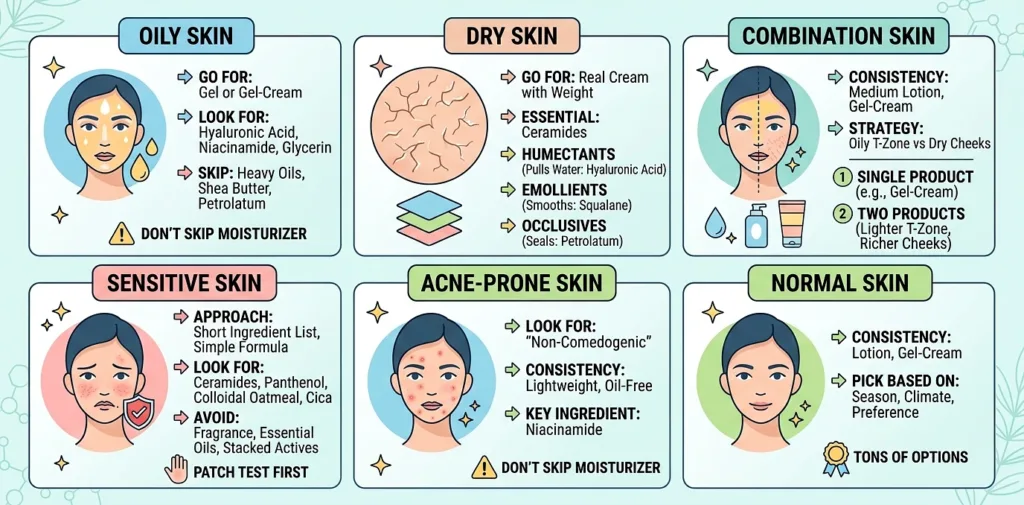
Go for a gel or gel-cream. Your skin is already making plenty of its own oil, so you don’t need a moisturizer adding more.
- Hyaluronic acid
- Niacinamide
- Glycerin
Skip anything with heavy oils, shea butter, or petrolatum. Those will feel suffocating and can trigger breakouts.
And please don’t skip moisturizer thinking it’ll help your oiliness. It won’t. Dehydrated skin actually produces more oil to compensate.
For Dry Skin
You need a real cream with some weight to it. Ceramides are non-negotiable for you.
The best moisturizers for dry skin combine three things:
- Humectants that pull water into your skin (hyaluronic acid, glycerin).
- Emollients that smooth and soften (squalane, shea butter).
- Occlusives that seal moisture in (petrolatum, dimethicone).
Dry skin needs all three layers of hydration working together. Don’t settle for a product that only does one of those jobs.
For Combination Skin
A medium lotion or gel-cream usually hits the sweet spot. Your T-zone (forehead, nose, chin) tends to be oilier while your cheeks run drier.
You can also use two different products:
- Something lighter on the T-zone
- Something richer on the cheeks
I do this myself during winter and it works beautifully. Sounds fussy, but it takes an extra ten seconds.
For Sensitive Skin
Keep it boring on purpose. The shorter the ingredient list, the better.
Look for calming ingredients like:
- Ceramides
- Panthenol
- Colloidal oatmeal
- Centella asiatica (also called cica)
Avoid fragrance, essential oils, and stacked actives. Brands like Vanicream, La Roche-Posay Toleriane, and Avene were basically made for sensitive skin. Always patch test before putting anything new on your whole face.
For Acne-Prone Skin
Look for “non-comedogenic” on the label. That term isn’t regulated by the FDA, so it’s not a guarantee, but it shows the brand is at least thinking about pore-clogging.
At some point, I noticed certain words on labels. One of them stood out. Non comedogenic moisturizer simply means it is made not to clog pores. That does not mean magic. It just means the formula is lighter.
Stick with lightweight, oil-free formulas with niacinamide, which can calm active breakouts and redness.
Please don’t skip moisturizer just because you’re breaking out. Stripping your skin dry usually makes acne worse, not better. Your skin needs hydration to heal.
For Normal Skin
You’ve won the skin lottery. You have tons of options.
Pretty much anything in the lotion or gel-cream range will work well. Pick based on the season, your climate, and what feels good to you.
How Do I Choose a Moisturizer for Aging Skin?
Aging skin has different needs, and the moisturizers you loved in your twenties probably won’t cut it anymore. This is something nobody really tells you until you’re standing in front of the mirror wondering why your skin suddenly looks different.
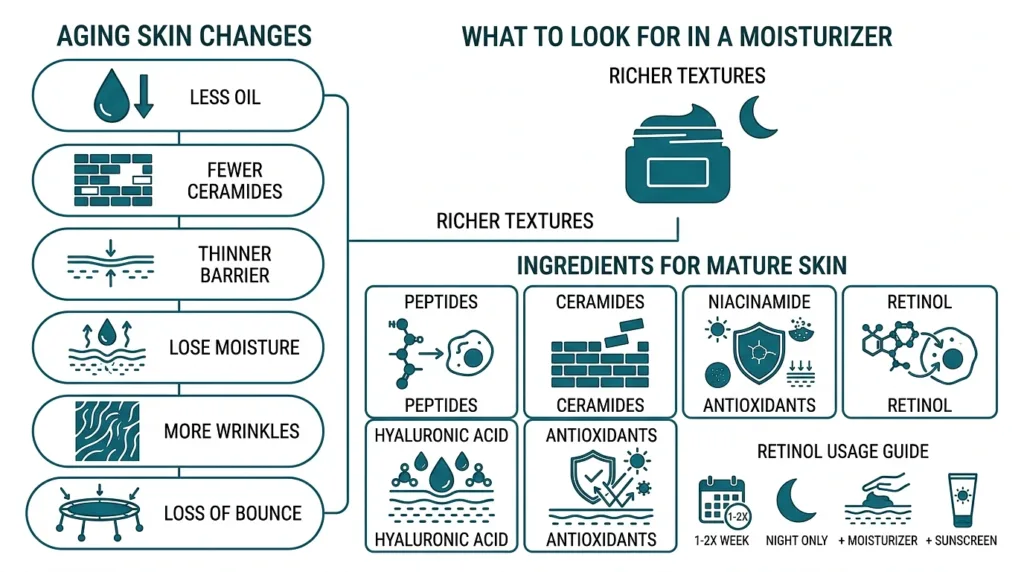
As we get older, skin naturally changes in these ways:
- Makes less oil.
- Produces less hyaluronic acid.
- Contains fewer ceramides.
- Has a thinner barrier.
- Loses moisture faster.
- Shows more fine lines and wrinkles.
- Loses bounce and elasticity.
The good news? A smart moisturizer can genuinely help, even if it can’t turn back time completely.
Here’s what I look for as skin matures:
Richer Textures
That lightweight gel you loved at 25 probably won’t feel like enough at 45. Move toward creams with more substance, especially for nighttime.
Your skin does most of its repair work while you sleep. Giving it a rich, nourishing cream overnight pays off.
Peptides
These are short chains of amino acids that signal your skin to make more collagen, the protein that keeps skin firm and plump.
Peptides aren’t a miracle fix, but with consistent use over months, they genuinely help skin look smoother and more resilient.
Look for ingredients like:
- Matrixyl
- Copper peptides
- Palmitoyl pentapeptide
Ceramides
Even more important now than before. They rebuild the barrier that’s gotten thinner with age, helping your skin hold onto moisture and stay calm.
Mature skin without enough ceramides tends to feel rough, dry, and easily irritated.
Hyaluronic Acid
Still a must-have, and even more useful now since your skin makes less of its own.
Some products include multiple molecular weights of hyaluronic acid, which hydrate at different depths of the skin for fuller-looking results.
Niacinamide
One of the best-studied ingredients for aging skin. It helps with:
- Uneven tone
- Sun spots
- Texture
- Barrier strength
If I had to pick one multitasking ingredient for mature skin, this would be it.
Antioxidants
These protect your skin from daily environmental damage that speeds up aging, including pollution and UV exposure.
Look for:
- Vitamin E
- Vitamin C (usually in a separate serum)
- Green tea extract
- Resveratrol
Think of antioxidants as your daily defense team.
Retinol or Retinoids
Retinol isn’t a moisturizer, but it deserves a mention here. If you’re going to add one anti-aging active, this is the one with the most scientific evidence behind it.
It encourages skin cell turnover, boosts collagen, fades discoloration, and smooths fine lines over time.
How to use retinol safely:
- Start once or twice a week at first.
- Use it at night only.
- Always layer a good moisturizer on top.
- Expect some purging and dryness for the first few weeks.
- Always wear sunscreen the next morning.
What to Skip as Your Skin Ages
- Heavily fragranced products.
- Products with denatured alcohol near the top of the ingredient list.
- Anything promising overnight miracles.
Real changes in mature skin take months of consistent care, not days. Anyone selling you a quick fix is selling you snake oil.
Don’t Forget Sunscreen
Please, I’m begging you, don’t skip SPF during the day. No anti-aging moisturizer in the world can keep up with unprotected sun exposure.
UV damage is responsible for up to 80% of visible skin aging. That means most wrinkles, sun spots, and loss of firmness we blame on getting older are actually caused by the sun.
- SPF 30 or higher, every single day.
- Rain or shine.
- Indoors near windows or outdoors.
- Reapply every two hours if you’re out.
This is the single most important thing you can do for aging skin. Full stop.
Picking the right moisturizer doesn’t have to be complicated once you know what to look for.
- Start with your skin type.
- Match it to the right texture and ingredients.
- Pay attention to how your skin changes with age and seasons.
- Give every new product four to six weeks to prove itself.
Skincare isn’t a one-time decision. Stay flexible and adjust as your skin tells you what it needs.
And if you’re still feeling stuck, grab a simple ceramide cream from CeraVe, La Roche-Posay, or Vanicream and start there. Your skin will thank you, and your wallet will too.


About author

Add comment