
Overview
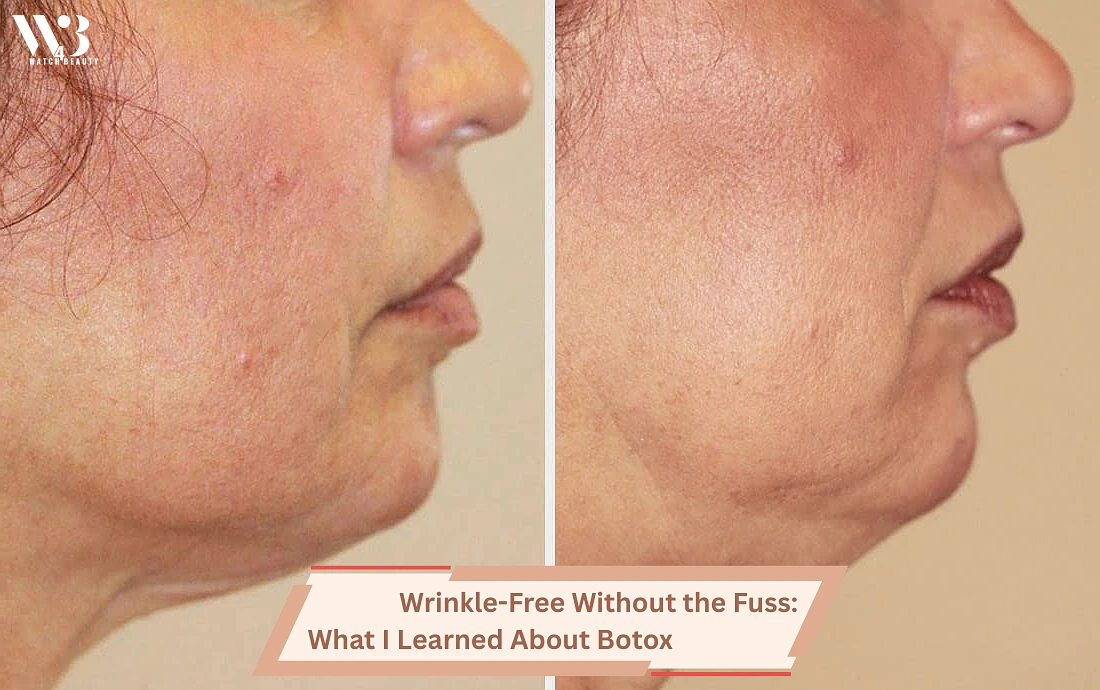
Botox is a non-surgical cosmetic therapy that temporarily relaxes facial muscles, to soften wrinkles and give the skin a more youthful, refreshed look without appearing frozen. It is also commonly applied to target dynamic wrinkles-lines created by repetitive motions such as smiling or frowning-that are common around the forehead, between the eyebrows (11 lines), and around the eyes (crow’s feet).
Botox has been in my head as something other people did. Celebrities. Wealthy aunts. Women who lunched. I envisioned frozen foreheads, shocked eyebrows and a sense of vanity that I was not entirely sure I wanted to call my own.
One afternoon I found myself in a Zoom meeting and noticed the deep lines of 11 between my brows the ones that had silently crept in as I wasn’t paying much attention. When I stopped scowling they did not go away. It was what at last caused curiosity to overcome the reluctance.
What Is Botox
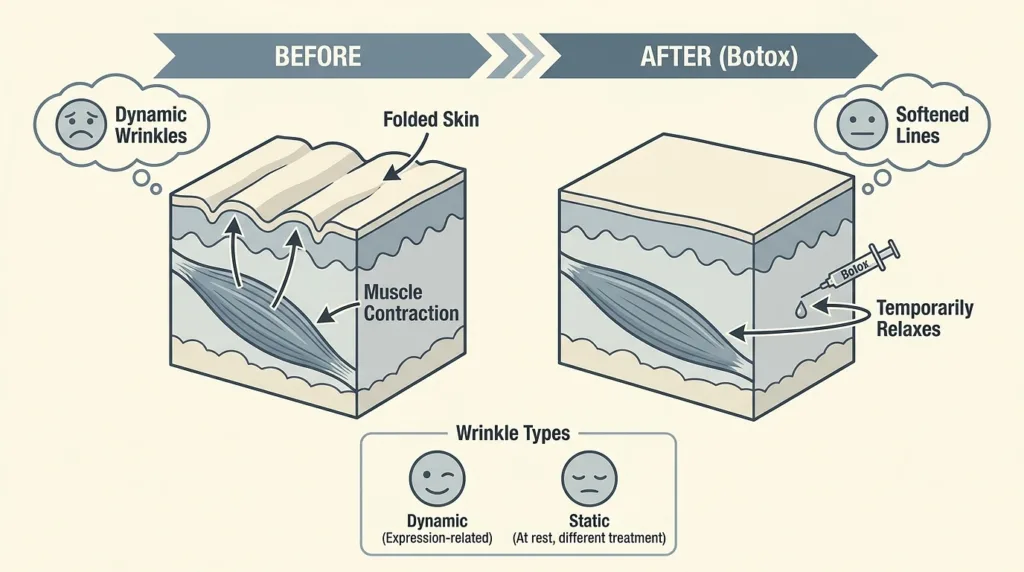
Botox is a purified form of botulinum toxin that temporarily relaxes the small muscles responsible for certain wrinkles. When those muscles stop contracting as forcefully, the skin above them gets a break from folding, and the lines soften.
That’s really it. No mystery, no magic. It’s a tool one that’s been used in medicine for decades, long before it became a beauty wellness buzzword.
The wrinkles it helps with most are the dynamic ones: the lines that show up when you make expressions. Forehead lines, frown lines between the brows, and crow’s feet around the eyes. Static wrinkles the ones etched in even when your face is at rest are a different conversation, often involving fillers, skincare, or simply time.
The Appointment Itself Was Almost Anticlimactic
I had built it up in my head. I expected nervousness, dramatic pain, maybe a recovery room.
What I got a fifteen-minute consultation, a clean face, a few small pinches that felt more like static electricity than needles, and a polite reminder not to lie down for four hours. I went back to work. No one noticed anything.
That was probably the first myth to crack for me the idea that Botox is a Big Production. Done well, it’s a quick, low-key visit.
What Actually Surprise Me
- It takes time to kick in: I walked out looking exactly the same. The changes started showing up around day four and fully settled in around the two-week mark. If you’re hoping to see results in the mirror that night, you’ll be disappointed.
- You don’t lose your face: This was my biggest fear. I still raise my eyebrows. I still squint. I still look like me just a slightly less tired version. The “frozen” look you sometimes see isn’t an inevitable result of Botox; it’s usually a result of too much of it, or it being placed in a way that doesn’t suit the person’s face.
- Less is genuinely more: My practitioner told me at the start, “We can always add more in two weeks. We can’t take it away.” That single sentence changed how I thought about the whole thing. Conservative dosing, especially the first time, is the move.
- It’s not forever: Botox wears off. For most people, results last three to four months before slowly fading. That can feel like a downside, but I came to see it as a feature if I didn’t like it, I knew it would simply pass.
What I Wish I’d Asked Before Going
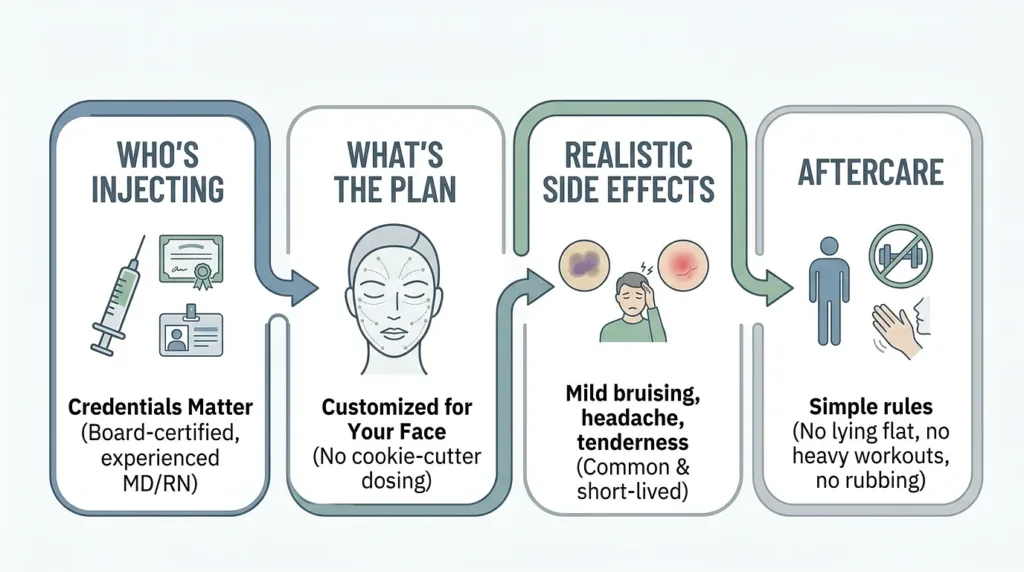
If I were doing it again, here’s what I’d want to know up front:
- Who’s actually doing the injecting: Credentials matter. A licensed and experienced injector typically a board-certified dermatologist, plastic surgeon, or trained nurse practitioner is worth seeking out. This isn’t the place to chase a deal.
- What’s the plan for my specific face: A good practitioner studies how your muscles move before reaching for a needle. Cookie-cutter dosing is a red flag.
- What are the realistic side effects: Mild bruising, a small headache, occasional tenderness at the injection site these are common and short-lived. Anything more dramatic is rare but worth understanding before you commit.
- What does aftercare look like: No lying flat for a few hours, no heavy workouts that day, no rubbing the area. Simple, but worth following.
The Honest Trade-Offs
I’d be doing you a disservice if I made this sound like an unqualified win.
It costs money and it’s recurring. Results fade. There are individuals who have unevenness to attend to a little bit of touch-up. It is also a less obvious expense the little psychological re-arrangement of one more thing to take care of. It is a genuine consideration, not a mere trifle.
I also think the cultural pressure around looking young is worth pushing back on, even while making personal choices that participate in it. I made my choice with eyes open. You should make yours the same way.
Would I Do It Again?
Yes but on my condition. Not that I had to check the number twenty-five one more time, but because, when one particular feature that bothered me was softened, I would think about it less. That is the part that no one actually tells you about cosmetic treatments: it is not necessarily that you are going to look different. It is sometimes only necessary to cease seeing.
This is a personal post, rather than a medical opinion. When thinking about Botox, it is best to discuss it with a board-certified dermatologist or licensed medical professional to talk about what is right in your skin, your goals, and your health history.

About author

Add comment