
Key Takeaways
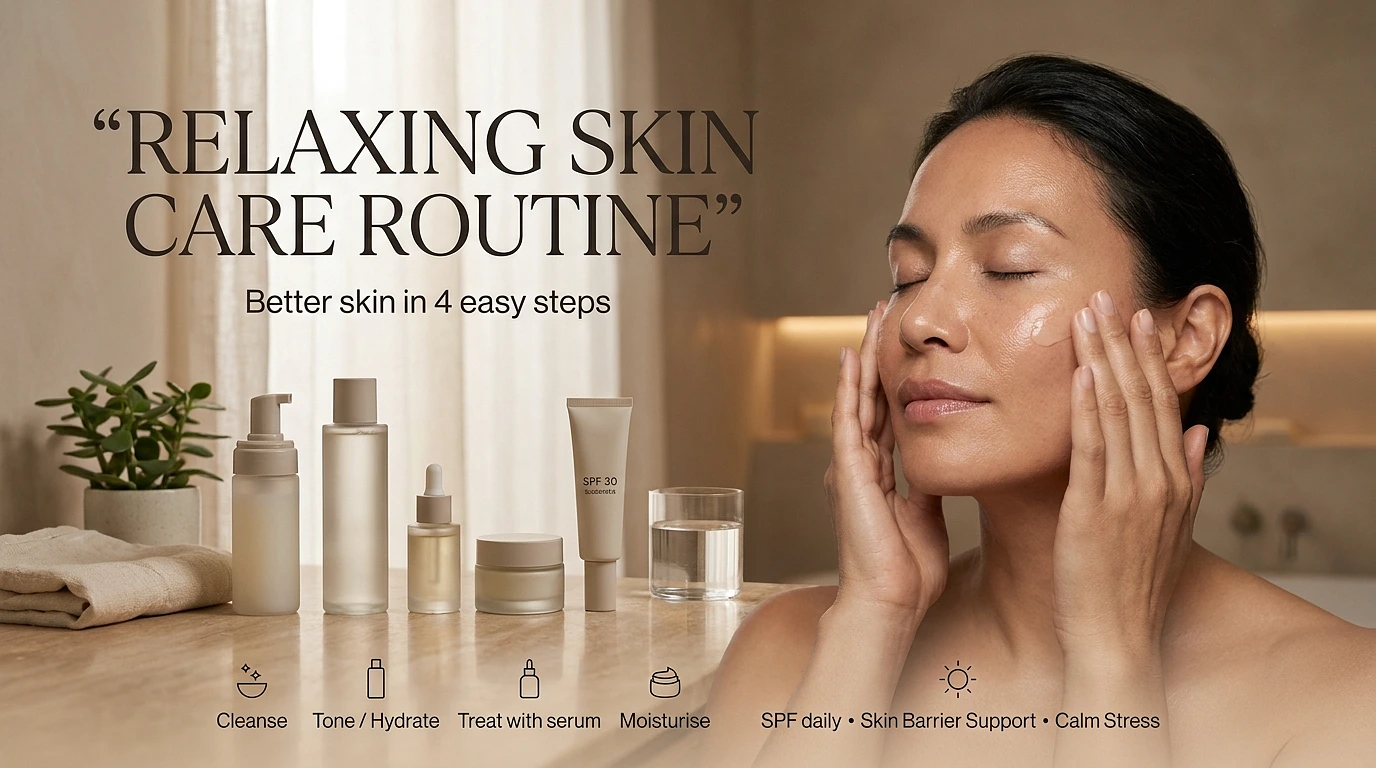
- Only three of the four procedures in a complete routine cleanse, tone, treat, and moisturize are really necessary.
- The optional one is toner. If you want to keep things simple, skip it initially and simply use it for really dry skin or for the additional relaxing routine.
- Sunscreen is the step you can’t skip. A broad-spectrum SPF 30 prevents far more visible ageing than any serum can reverse.
- Doing the routine slowly isn’t just pleasant. Stress raises cortisol, which weakens the skin barrier and slows repair, so a calm routine does a small amount of real work.
- A complete version built from drugstore brands costs roughly $50 to $65, often with the same active ingredients as luxury labels.
The majority of skincare regimens fall short for the same reason that fad diets do: they make excessive demands. Seven actives, ten stages, and a different acid for each night of the week. Nobody keeps that up, and here’s the irony. The version that actually improves your skin is shorter than the internet keeps telling you.
things’s not really about convenience, but there’s another, more subdued incentive to keep things brief. Stress is difficult for skin to handle. The skin barrier is weakened and healing is slowed when cortisol levels remain high. Skin cells exposed to stress-level cortisol mend wounds far more slowly than calmer ones, according to laboratory research. Sleep functions similarly: studies on sleep quality have shown that individuals with poor sleep quality exhibit more obvious indications of aging and recover from sun exposure more slowly than those with good sleep.
Therefore, it makes sense to approach these four processes as a way to wind down rather than as a duty. You’ll really repeat a routine every night if you can do it carefully and without hurrying. A soothing skin care regimen is all about doing fewer steps, doing them correctly, and giving yourself enough space to breathe so that your evening finishes somewhat softer than it began.
Cleansing is Where Most Routines Already Go Wrong
The mistakes here are small and they’re everywhere. People wash with water that’s too hot, scrub like dirt is the enemy, and pick a foaming cleanser that strips a face which was never that dirty to begin with.
Don't be harsh. Use lukewarm water, a low-foaming or non-foaming cleanser if your skin is dry, and slow, gentle circles for around 60 seconds. That's short enough that it doesn't seem like effort and long enough to really move sunscreen and makeup.
The one real decision is whether you need to wash twice. Double cleansing (an oil-based cleanser, then a water-based one) earns its place if you wear makeup, heavy sunscreen, or spend your day in a polluted city. If none of that’s you, one gentle cleanse at night is plenty. And in the morning, plenty of people with normal to dry skin get on fine with nothing more than a splash of water. Washing your face more often doesn’t make it cleaner in any way that matters.
Do You Actually Need a Toner?
The majority of toner is a remnant. In the past, toner restored the pH balance of your skin after soap left it tight and alkaline. That first task is no longer necessary since modern cleaners are already pH-friendly. These days, what is marketed as toner is often a thin coating of hydration, also referred to as an essence, that contains humectants and soothing components like aloe or chamomile.
So it’s genuinely optional. If you’re hunting for somewhere to trim the routine, start here. Two things still make it worth keeping. One is very dry or dehydrated skin, which likes that thin extra layer of water-based moisture before a serum. The other is the ritual itself. Instead of rubbing, you may calm down and feel grounded by pressing a few drops into your face and neck with flat hands. Even if the majority of the weight is in your brain, the toner is doing its job if that little pause is what motivates you to complete your regimen instead of skipping it.
The Serum Step, and How to Make it Count
This is the step worth slowing down for, because it’s the one actually aiming at a result.
The big mistake is layering. Three serums piled on top of each other don’t triple anything. They just raise your odds of irritation and pilling. Pick one concern, then one serum for it.
A few that suit a calm, barrier-friendly routine:
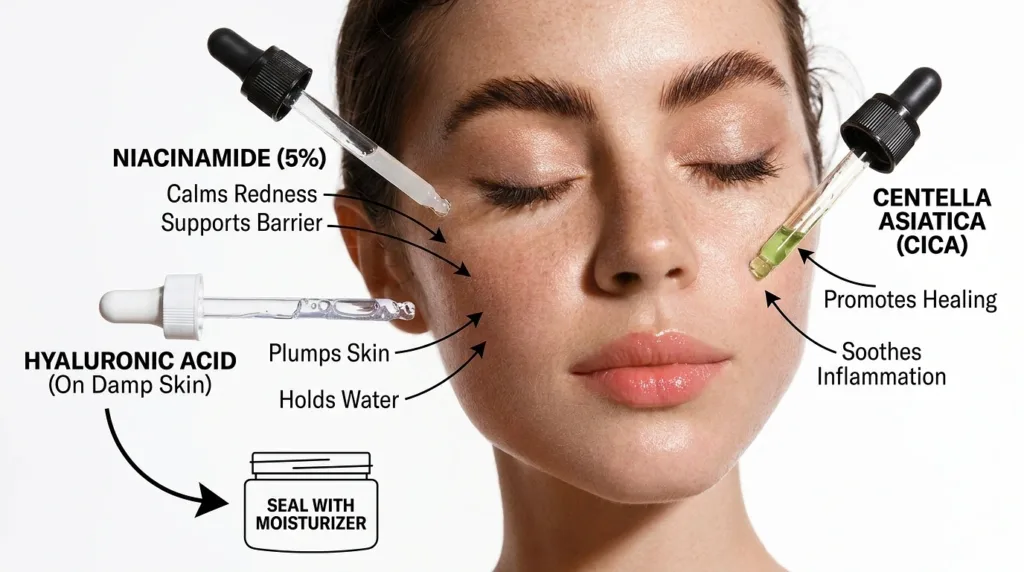
- Niacinamide calms redness and props up the barrier. Around five percent is the sensible strength; more isn’t better, and it can sting.
- Hyaluronic acid plumps skin by holding onto water, but there’s a catch worth knowing. In dry air it can pull moisture from deeper in your skin if there’s none on the surface. Put it on slightly damp skin, and always seal it with moisturiser.
- When skin is really inflamed or reactive, Centella asiatica, also known as cica, should be used since it tends to promote healing rather than active treatment.
Bring it in gradually and patch test anything new that comes up. Gently push in two or three drops, then give it a minute to soak.
Moisturiser, Massage, & the One Step You Can’t Skip
When moisturizer is applied to slightly wet skin, it helps retain the existing water. For oily skin, use lighter gel creams; for dry skin, use heavier ceramide creams. A few drops of a face oil, such as rosehip or squalane, applied over the top can act as a final seal if your skin is really dry.
If you want a fast face massage, this is the ideal time. Gently stroke outward from the center of your face toward your ears and then down your neck using your knuckles or a gua sha instrument. It relieves morning puffiness, promotes lymphatic drainage, and, to be honest, feels fantastic after a hard day. It’s not magical, it’s voluntary, and it matches the wind-down logic of the whole thing for free.
Sunscreen is the one step that is really unavoidable in the morning. When used as the last step before applying makeup, a broad-spectrum SPF of 30 or more prevents more noticeable aging than any serum can.
Here’s some helpful information on SPF values. The difference between 30 and 50 is not as great as it appears: About 97% of UVB rays are blocked by SPF 30 and 98% by SPF 50. It’s not the number on the bottle that really determines your level of protection, but rather how often and how much you use. The majority of individuals only apply one-third to one-half of what they ought to. The general recommendation for your face is two finger-lengths of product, which should be increased if you spend a significant amount of time outside.
Matching Ingredients to Your Skin Type

The four steps are the same for everyone. What goes inside them shouldn’t be. Here’s a short guide to soothing ingredients by skin type.
Dry or dehydrated skin needs ingredients that hydrate and rebuild the barrier:
- Ceramides are the lipids your barrier is naturally built from, so topping them up topically helps skin hold water.
- Colloidal oatmeal lays down a light protective layer and calms itchiness.
- Squalane mimics your skin’s own oil and softens rough patches without feeling greasy.
Oily or acne-prone skin wants calm without the heaviness:
- Niacinamide brings down inflammation and helps keep oil in check.
- Green tea extract is a strong antioxidant, and there’s evidence it lowers sebum.
- Zinc PCA settles breakout redness while keeping shine down through the day.
Sensitive or easily flushed skin needs the gentlest options:
- Centella asiatica and bisabolol, a chamomile derivative, both calm redness and reactivity.
- Aloe vera cools skin almost on contact and settles sudden irritation.
Combination skin, oily through the T-zone and drier on the cheeks, does best with ingredients that balance:
- Panthenol, or vitamin B5, hydrates the dry areas without weighing down the oily ones.
- Beta-glucan is deeply hydrating and soothing, and tends to leave a smooth finish rather than a heavy one.
If this Still Feels Like a Lot
It shouldn’t, but if it does, here’s the honest minimum: cleanse at night, moisturise, and wear sunscreen during the day. That’s three steps, and it’s already most of the benefit on offer. The serum and the toner are upgrades, not entry requirements.
Cost isn’t really a barrier either. A full version of this routine, built entirely from drugstore brands, comes to somewhere around $50 to $65, and those products often carry the same active ingredients as prestige lines charging several times more.
A relaxing skin care routine works not because four is some magic number, but because a short routine done slowly every day beats a long one you abandon within a fortnight. Consistency is the active ingredient nobody prints on a label.


About author

Add comment