
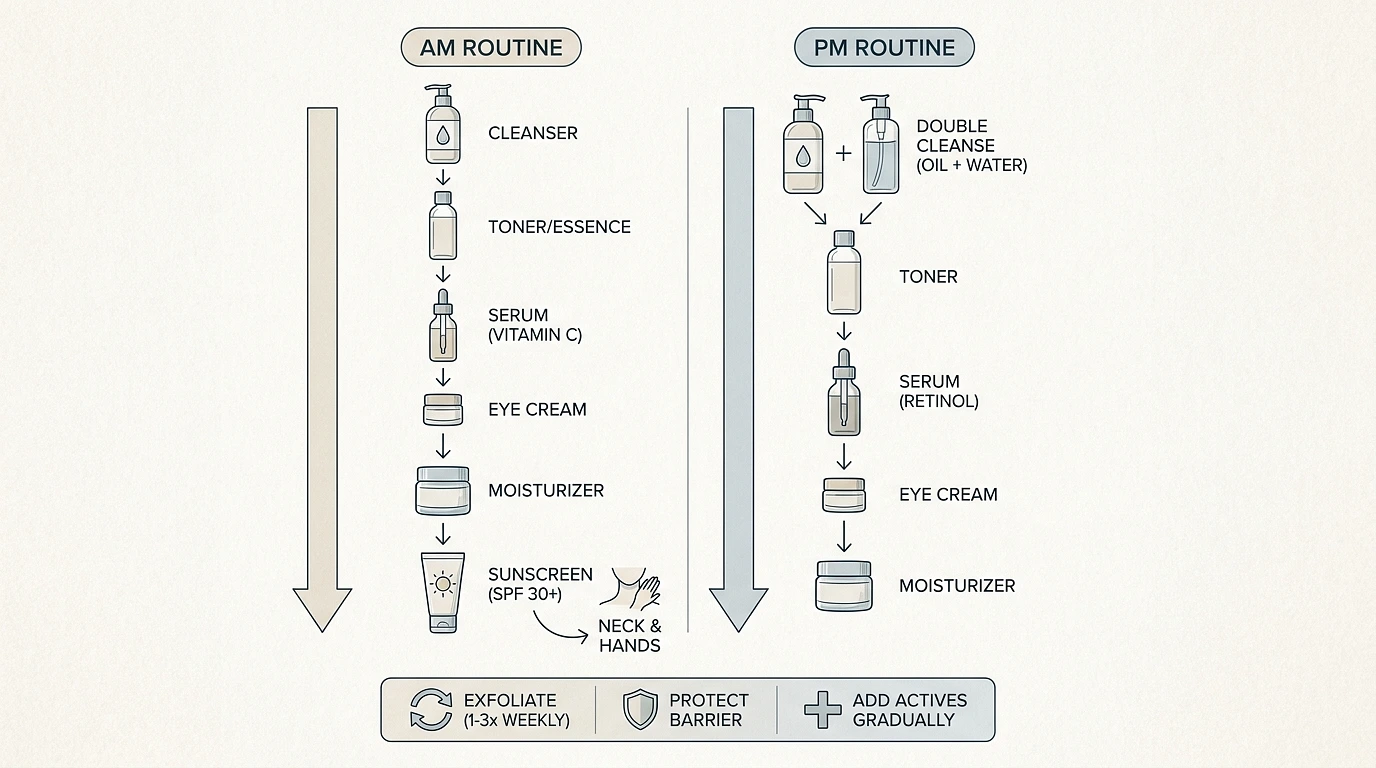
Final Takeaway
The most ideal routine is that which you will be doing. Begin with a basic cleanser, a humecturizer, and free-form sunscreen and consider the addition of active ingredients to the products, say retinol, vitamin C, or niacinamide, over time, depending on the health of your skin. Keep an ear on the way your skin reacts, allow all products to take their time and keep in mind; healthy skin is an investment and not a solution.
Creating an excellent skin care routine does not involve following a fad or sitting on top of shelves with products. It is all about knowing how your skin functions, selecting evidence-based ingredients, and using them in the appropriate manner. We have provided a very comprehensive-level guide based on the best dermatology organizations, such as the American Academy of Dermatology (AAD), the U.S. Food and Drug Administration (FDA), and peer-reviewed articles available on PubMed/NIH (NCBI).
1. Cleanse Your Face Twice a Day
Cleansing is the foundation of any skin care routine. Throughout the day, your skin accumulates sweat, sebum, dead skin cells, sunscreen, makeup, and environmental pollutants. At night, sebaceous glands continue to produce oil. If left on the skin, this buildup can clog pores, weaken the barrier, and trigger breakouts.
Dermatologists recommend a gentle, pH-balanced, sulfate-free cleanser that doesn’t leave skin feeling tight or stripped. Use lukewarm water hot water disrupts the lipid barrier and can worsen dryness or rosacea. The American Academy of Dermatology emphasizes that proper face washing is foundational to healthy skin.
2. Double Cleanse at Night (Especially With Makeup or Sunscreen)
A double cleanse uses two cleansers in sequence: first an oil-based cleanser or balm to dissolve oil-soluble residues like sunscreen, sebum, and makeup, then a water-based cleanser to remove sweat, dirt, and water-soluble impurities.
This is especially important if you wear long-wear makeup, mineral sunscreen, or live in a polluted urban environment. A single cleanse often isn’t enough to clear everything off the skin without scrubbing harshly.
3. Know Your Skin Type Before Buying Products
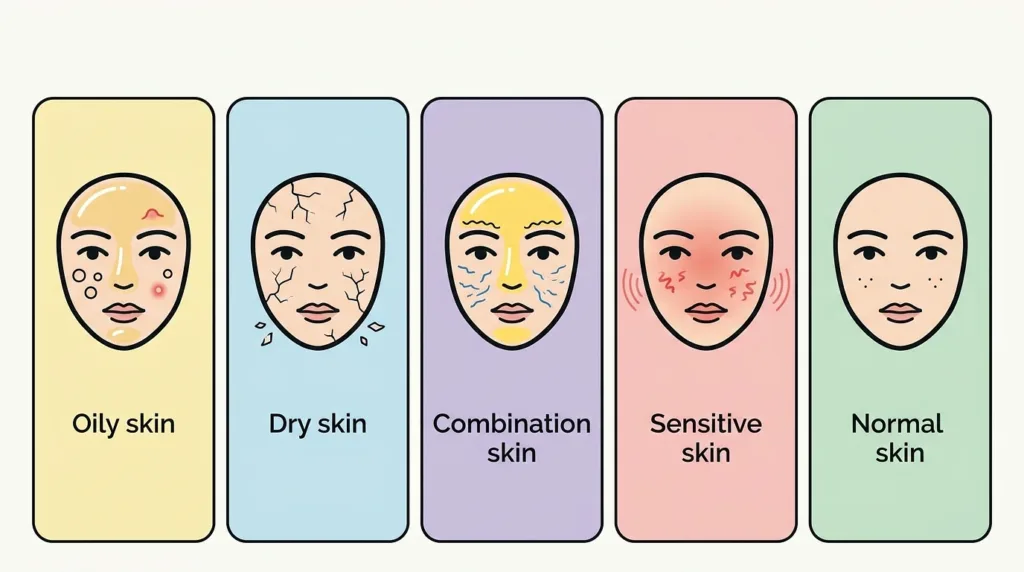
There are five main skin types: oily, dry, combination, sensitive, and normal. Using products formulated for the wrong type causes breakouts, dehydration, irritation, or barrier damage.
- Oily skin – visible shine, enlarged pores, frequent breakouts.
- Dry skin – tightness, flaking, dull appearance.
- Combination skin – oily T-zone, dry cheeks.
- Sensitive skin – stings, burns, or reddens easily.
- Normal skin – balanced, few concerns.
Dermatologists recommend consulting a professional every 6 to 12 months or whenever your skin changes, since hormones, climate, and age can shift your skin type over time.
4. Apply Products from Thinnest to Thickest
The order of layering dramatically affects how well each product works. Dermatologist Shereene Idriss, MD, advises applying products from lightest to heaviest.
- Cleanser.
- Toner / Essence (water-based hydration).
- Serums (vitamin C in AM, retinol in PM).
- Eye cream.
- Moisturizer.
- Sunscreen (morning) or facial oil (night).
Lighter, water-based formulas should always go first so they can penetrate; heavier oils and creams seal everything in.
5. Sunscreen Is Non-Negotiable
If you do nothing else for your skin, wear sunscreen. UV radiation causes the majority of visible skin aging wrinkles, dark spots, sagging and is a leading cause of skin cancer.
The FDA classifies sunscreen as an over-the-counter (OTC) drug, requiring strict safety and efficacy testing. FDA regulations require that all sunscreens with an SPF of 15 or higher meet broad-spectrum test requirements, with a UVA-to-UV ratio of 0.7 or higher and a critical wavelength of at least 370 nm.
The AAD recommends:
- Broad-spectrum protection (UVA + UVB).
- SPF 30 or higher.
- Water-resistant formula.
- Reapply every 2 hours, or after swimming or sweating.
According to AAD experts, SPF 30 blocks roughly 97% of UVB radiation when used properly, and reproducibility of SPF is most accurate after waiting about 15 minutes for absorption. Most people under-apply sunscreen, which is why the AAD recommends SPF 30 or higher to ensure at least SPF 15 protection in real-world use.
6. Introduce Active Ingredients Gradually
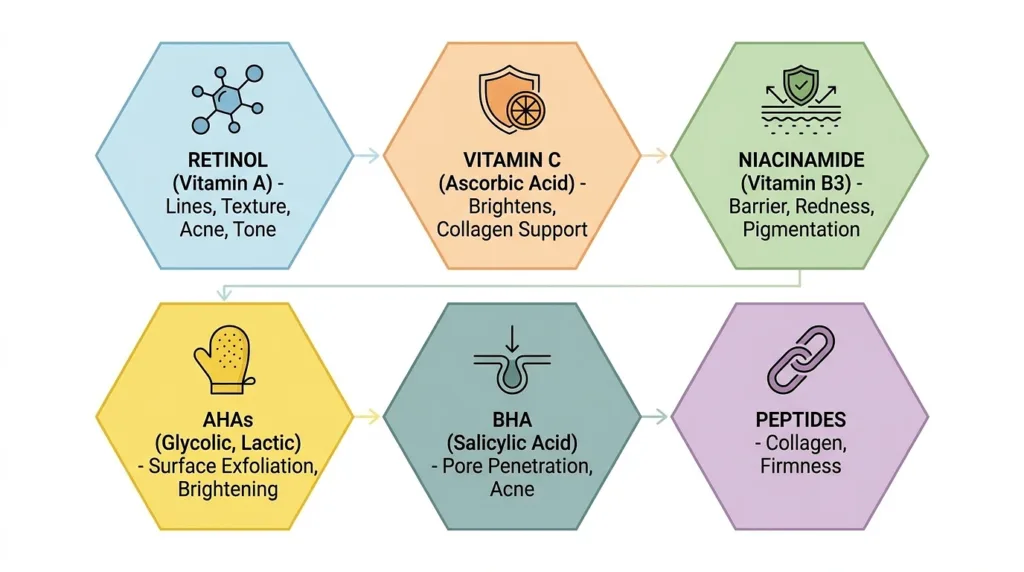
Actives are the heavy hitters ingredients that produce real, measurable changes in the skin. The most studied include:
- Retinol / Retinoids (Vitamin A derivatives) – improve fine lines, texture, acne, and pigmentation.
- Vitamin C (Ascorbic Acid) – antioxidant that brightens and supports collagen.
- Niacinamide (Vitamin B3) – strengthens the barrier, reduces redness and pigmentation.
- AHAs (Glycolic, Lactic Acid) – surface exfoliation, brightening.
- BHA (Salicylic Acid) – penetrates pores, ideal for acne.
- Peptides – support collagen production and firmness.
Experts advise newcomers to retinoids to start with a low concentration of 0.025% to 0.05%, applied three nights per week, and gradually increase frequency over four to six weeks to reduce the risk of retinoid dermatitis redness, peeling, and irritation while the skin acclimatises.
A 2021 review published on NCBI/PubMed (DOI: 10.3390/antiox10081315) confirms that nicotinamide supplementation restores cellular NAD⁺ pools, attenuates oxidative stress, enhances the extracellular matrix and skin barrier, and inhibits pigmentation, with topical formulations well tolerated in clinical trials.
7. Moisturize Even If You Have Oily Skin
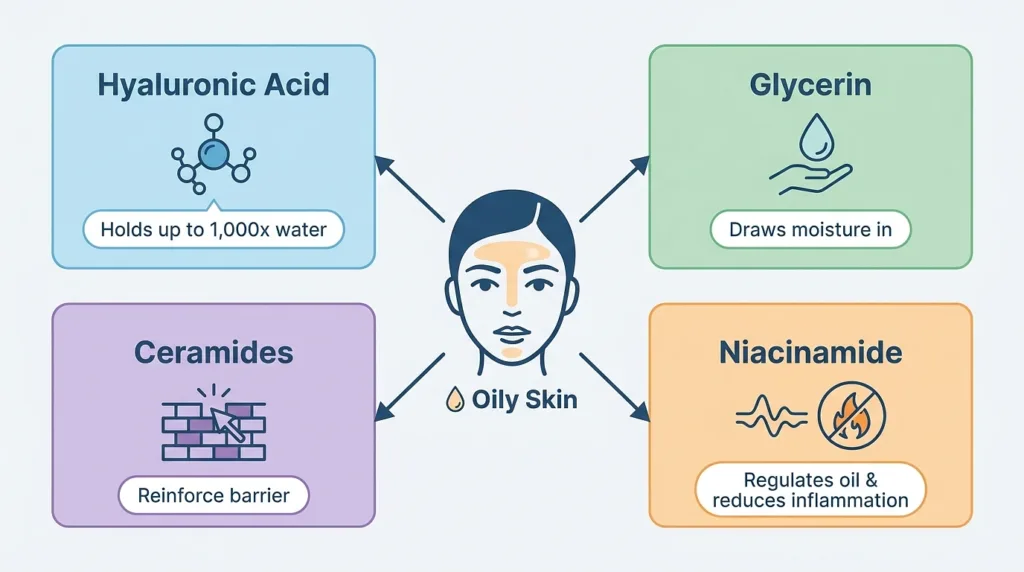
A common myth is that oily skin doesn’t need a moisturizer. In reality, dehydrated skin produces more oil to compensate, which worsens shine and breakouts.
Look for non-comedogenic, lightweight formulas with hydrating actives:
- Hyaluronic Acid – holds up to 1,000× its weight in water.
- Glycerin – humectant that draws moisture into skin.
- Ceramides – repair and reinforce the skin barrier.
- Niacinamide – regulates oil and reduces inflammation.
8. Protect and Repair Your Skin Barrier
Your skin barrier (stratum corneum) is the outermost layer that locks in moisture and keeps irritants out. Signs of a damaged barrier include redness, stinging, flaking, sudden sensitivity, and breakouts that won’t heal.
To repair it:
- Pause all actives (retinol, exfoliants, vitamin C).
- Use products with ceramides, cholesterol, fatty acids, and centella asiatica.
- Avoid hot water, alcohol-based toners, and over-cleansing.
Niacinamide modulates keratinocyte lipid output by stimulating the synthesis of ceramides, cholesterol, and free fatty acids directly improving skin barrier function and also inhibits melanosome transfer, reducing hyperpigmentation.
9. Exfoliate But Don’t Overdo It
Exfoliation removes dead skin cells, brightens dullness, and helps other products absorb. There are two main types:
- Chemical exfoliants – AHAs (glycolic, lactic) for surface; BHA (salicylic) for pores.
- Physical exfoliants – scrubs, brushes (use with caution; can cause microtears).
Most skin types tolerate 1–3 times per week. Over-exfoliation is one of the most common causes of barrier damage, leading to redness, sensitivity, and ironically more breakouts.
10. Don’t Neglect Your Neck, Chest, and Hands
These areas have thinner skin and fewer sebaceous glands than the face, making them quick to show signs of aging crepiness, sun spots, sagging. Yet they’re routinely ignored.
Extend your moisturizer, sunscreen, retinol, and vitamin C down to your neck, décolletage, and the backs of your hands every day. The effort pays off significantly over years.
See a Dermatologist When Needed
Over-the-counter products can only do so much. A board-certified dermatologist can prescribe stronger treatments and perform procedures for:
- Persistent acne (tretinoin, isotretinoin).
- Melasma and stubborn hyperpigmentation.
- Rosacea.
- Eczema and psoriasis.
- Suspicious moles or skin changes (skin cancer screening).
Cleveland Clinic dermatologists advise that if simple measures and elimination of potential allergens don’t improve a skin condition, you should seek medical attention from a dermatologist.


About author

Add comment