
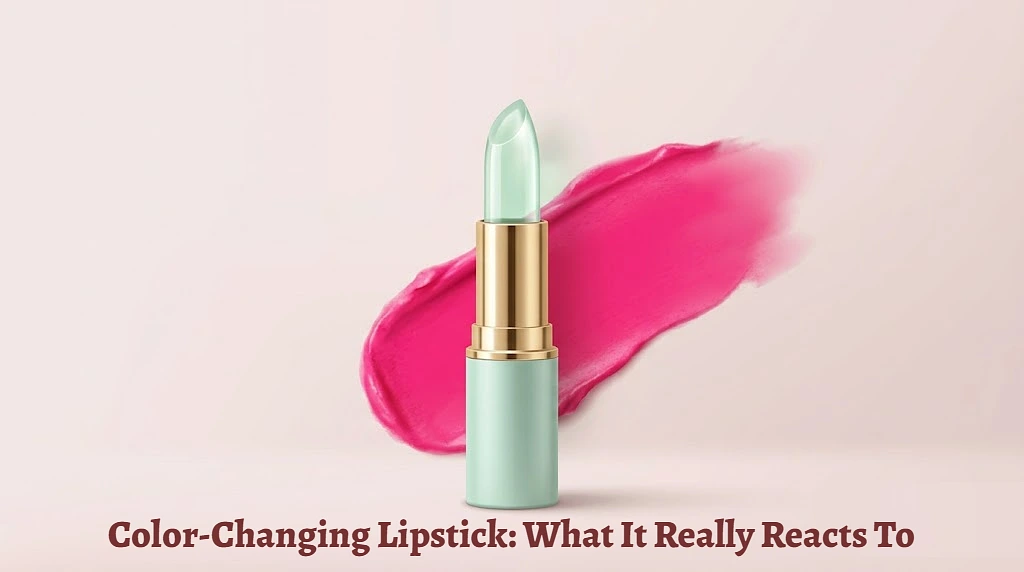
The lipstick isn’t reading you. It’s one dye called Red 27 that goes from clear in the tube to pink the second it hits the wet, slightly-higher-pH surface of your lip makeup. That pink is roughly the same pink on nearly everyone. The “made for your unique chemistry” part is marketing, and it’s the part the price tag is really for.
You twist the tube up and the bullet’s clear. Or green. Or some odd blue that has nothing to do with what ends up on your mouth. You swipe, wait a beat, and it turns pink. The packaging tells you this is your shade, custom-tuned to you, like the thing somehow scanned your lips and decided.
It didn’t decide anything. That same tube would turn the same pink on the person sitting next to you, and the one next to them. It’s a single dye doing one chemistry-class trick, dressed up in language about personalization.
What’s Actually In The Tube
Almost every color-changing lipstick or blush you’ll find runs on one ingredient. It’s Red 27, and you’ll spot it on the label as CI 45410. It’s a fluorescein dye, and the reason it can pull this off is that it exists in two different forms depending on its surroundings.
One form has no color at all. The other is a loud fuchsia pink. The dye switches between them based on two things, and only two: whether water is around, and what the pH is.
That’s why the formula inside the tube is kept bone dry. No water means Red 27 stays in its colorless state, so the bullet can look clear, or get tinted some unrelated shade for the shelf. Then it meets your lips, which are damp and less acidic than the tube, and it flips to pink. That flip is the whole show.
The Ph Math The Box Leaves Out
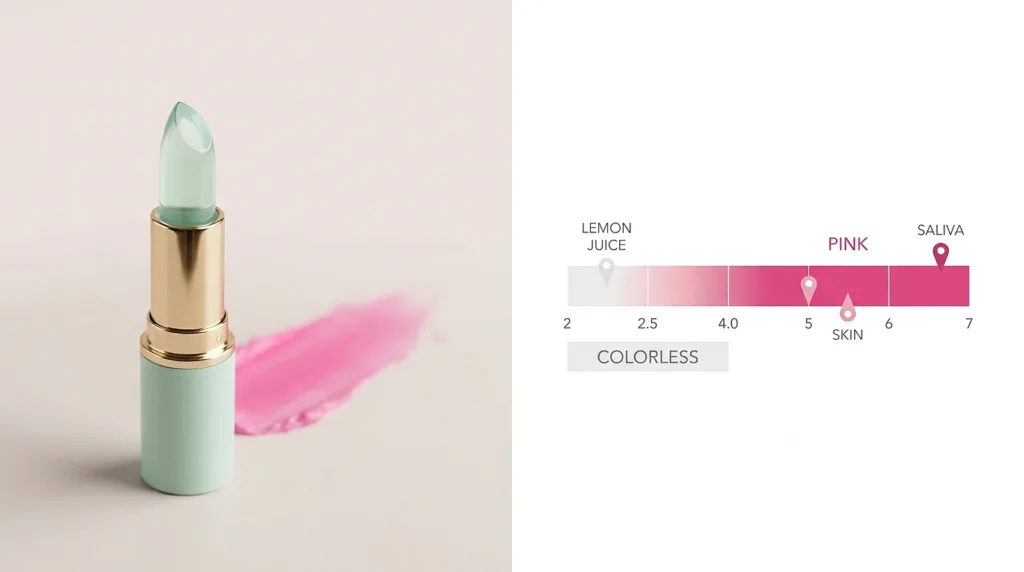
This is where it gets interesting, because the dye’s behavior is documented and specific. Red 27 follows clear thresholds:
- Under pH 2.5, even soaking wet, it stays colorless.
- Over pH 4.0, with water present, it’s pink.
- In the gap between 2.5 and 4.0, it’s a blend, so you’d see anything from a pale pink to a deeper one.
Your skin sits around pH 5. Your saliva’s closer to 6.7. Both clear the 4.0 line without breaking a sweat. To put it in everyday terms, lemon juice is about 2.3, and you’re not walking around with lemon-juice lips.
So no matter your skin tone, no matter the weather, no matter who you are, Red 27 ends up pink. Nobody’s lips sit anywhere near the pH where the result would actually shift. The dye has one pink in it, and your chemistry isn’t close to the boundary that would change that.
So Why Does It Look A Little Different On Different People?
Because there’s a grain of truth in the pitch, and it’s worth being honest about it. The brands aren’t technically lying. They’re just letting you draw a bigger conclusion than the facts support.
Yes, the lipstick reacts to your lips. But only in the sense that your lips are wetter and less acidic than the inside of the tube, which is what sets the dye off in the first place. That trigger is identical for everyone. Think of a doorbell. It rings when anyone presses it. It’s not recognizing who you are.
The actual variation you see comes from the same two things that make any sheer product look slightly different person to person:
- How much you build it up. Red 27 is a dye, so it goes on see-through. More pigment in the formula, or more swipes from you, gives a stronger pink. That’s not the lipstick tailoring itself, that’s just how sheer color stacks.
- Whatever your lips already look like. A transparent pink sits differently over deeper lips than over fair ones. Every sheer gloss in history does this. It’s your own coloring showing through, not the product doing a calculation.
Strip it down and the “custom shade” is this: a buildable sheer pink that varies because people’s lips vary. A plain tinted balm that never changes color at all could make the exact same claim.
What You’re Really Paying Extra For
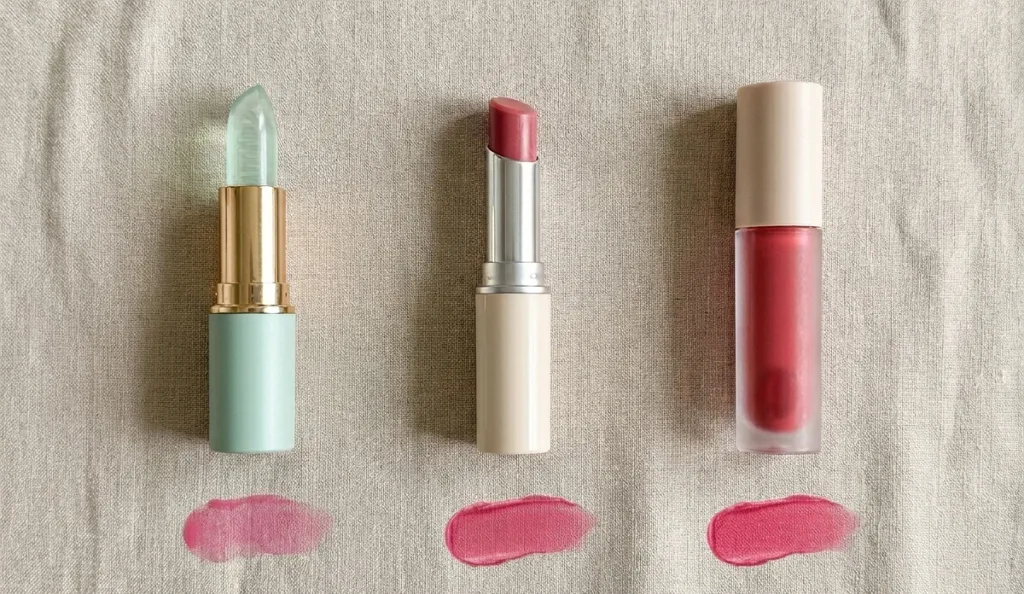
Color-changing lipsticks tend to cost more than a basic tinted balm or a sheer stain. And the thing justifying that markup is the personalization story, the promise that this shade was engineered for you in particular.
What you’re paying for is the reveal. Those few seconds of clear-turning-pink, plus the copy on the box. The product underneath is a single sheer pink that Red 27 makes for everybody. Find a regular sheer pink in a tone you like and you’ll usually land in the same place for less, because chemically, it’s the same kind of thing.
One practical heads-up too. Red 27 stains, so these often leave a faint pink that lingers after the balm itself is gone, since the dye grips the lips a bit. Great if you want color that survives a coffee without reapplying. Less great if the pink wasn’t what you were hoping for, because it’s not the kind of thing you can just wipe off.
Is Red 27 Safe To Wear?
The regulatory side is actually settled:
- It’s FDA-approved for cosmetics, lip products included, and every batch sold in the US has to be FDA-certified for purity before it’s allowed into a product.
- It’s not cleared for food, and it’s not allowed near the eye-care.
The fear usually traces back to confusing D&C Red No. 27 with FD&C Red No. 3, which is a food dye with a completely separate history. Different ingredient, different story. On your lips, in its approved use, batch-certified Red 27 is a well-worn, well-reviewed colorant.
About author

Add comment