
The Takeaway
It takes effort, supported by science, to get a beautiful, healthy complexion; there isn’t a single miracle lotion that can do it. Your skin care regimen should follow your body’s natural rhythm by completely washing your skin, using cell-communicating substances like retinoids, and vigorously protecting your skin barrier from moisture loss overnight.
Your skin works when it’s dark. Morning skin care is all about protection because it is protecting your face from the sun, pollution and free radicals, night skin care is all about restoration.
The skin's night shift is known as the skin's “recovery phase” by dermatologists. While in deep sleep, blood flow to the skin increases and the turnover of skin cells accelerates. Your skin is very receptive to the active ingredients since you've eliminated environmental stressors.
If you’re looking to start your day with a healthy, rejuvenated complexion, the following night routine has been created by a dermatologist to support optimum cell repair.
The Science of Nighttime Skin Repair
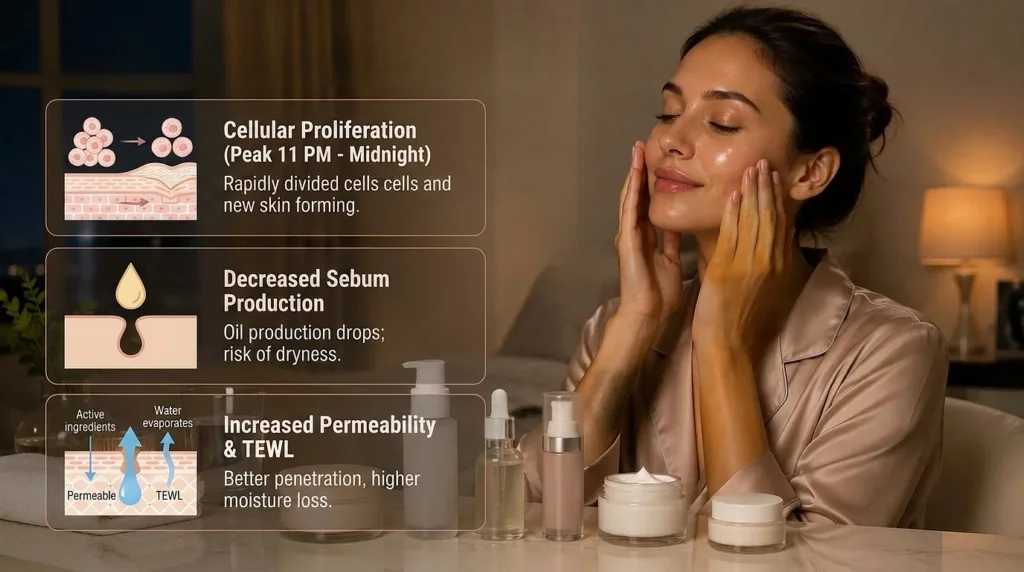
Before beginning the stages, it is crucial to comprehend why a PM regimen is necessary. There is a circadian cycle in the skin, according to studies. At night, three crucial biological activities occur:
- Cellular Proliferation: Cell turnover rates peak between 11:00 PM and midnight, meaning your skin is actively shedding dead cells and generating new ones.
- Decreased Sebum Production: Oil production drops at night, which can lead to dryness if not properly managed.
- Increased Permeability: The skin barrier is more permeable at night. While this means active ingredients can penetrate more effectively, it also means Transepidermal Water Loss (TEWL) is at its highest, leading to overnight moisture loss.
To capitalize on this repair window while mitigating moisture loss, your routine needs a strategic balance of cleansing, treating, and barrier-building.
Step 1: The Double Cleanse (The Non-Negotiable Start)
Skin cells suffocated beneath a layer of cosmetics, pollution, and SPF cannot be repaired. All dermatologists advise using the “double cleanse” technique at night.
- First Cleanse (Oil-Based): An oil cleanser or cleansing balm binds to lipophilic (oil-loving) impurities like sebum, sunscreen, and makeup, breaking them down gently without stripping the skin.
- Second Cleanse (Water-Based): Follow up with a gentle, hydrating gel or cream cleanser to wash away water-based impurities like sweat and dead skin cells. Look for ingredients like glycerin or ceramides to keep the skin’s pH balanced.
Step 2: Liquid Exfoliation (2-3 Times a Week)
When it comes to promoting the natural cellular turnover of your skin, chemical exfoliants are your greatest friend. Alpha hydroxy acids (AHAs), such as lactic acid and glycolic acid, dissolve the “glue” that binds dead skin cells together, revealing the glowing skin underneath.
- Derm Note: Steer clear of physical washes as they may cause tiny skin tears. Instead, to encourage cell renewal and unclog pores, apply a mild AHA/BHA liquid to your face several times a week.
Step 3: The Star Player – Retinoids
The gold standard for anti-aging and cell repair, according to dermatologists, is vitamin A (retinol, retinaldehyde, or prescription tretinoin).
Retinoids increase collagen production, accelerate cell division, and lessen cellular hyperpigmentation. Because they degrade under sunlight, retinoids should only be used at night.
- Use: Apply a pea-sized amount on dry skin. If you are new to retinoids, try taking them one or two nights a week to build tolerance. (Note: Never use chemical exfoliants and retinoids on the same night to avoid damaging the barrier. Rather, alternate them using a method known as “skin cycling.”
Step 4: Deep Hydration (Targeting TEWL)
Restoring hydration is essential since your skin loses moisture more quickly throughout the night. Humectants are useful in this situation.
- Hyaluronic Acid & Glycerin: Apply a hydrating serum with these ingredients to slightly damp skin if you’re not taking a retinoid that night. By attracting water from the environment into the epidermis, they smooth out fine wrinkles and fill the skin.
Step 5: Barrier Repair and Moisture Sealing
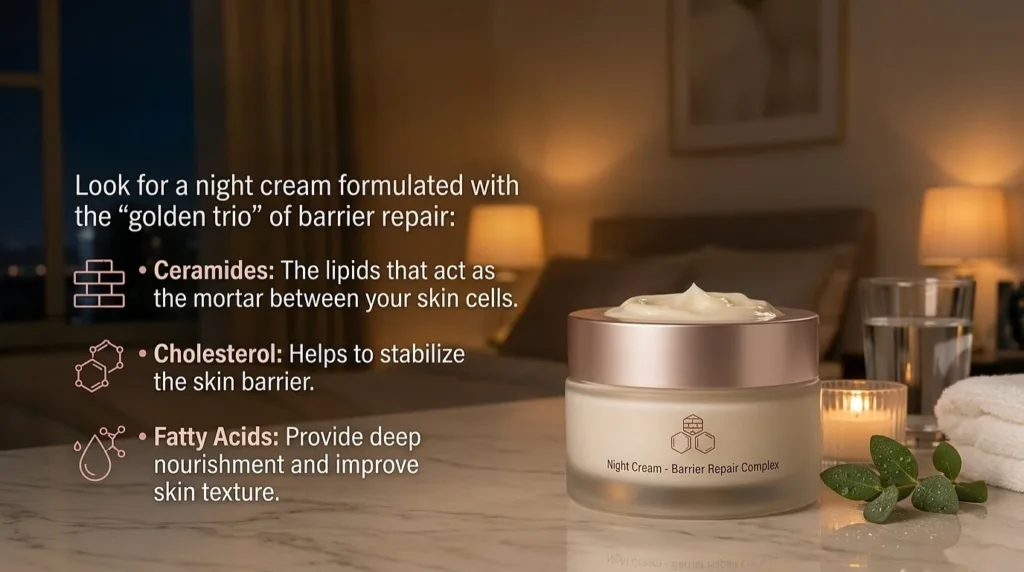
Locking everything in is the last phase. To keep hydration and active ingredients in your skin and stop Transepidermal Water Loss (TEWL), you need an occlusive moisturizer.
Look for a night cream formulated with the “golden trio” of barrier repair:
- Ceramides: The lipids that act as the mortar between your skin cells.
- Cholesterol: Helps to stabilize the skin barrier.
- Fatty Acids: Provide deep nourishment and improve skin texture.
For those with very dry skin, a method known as “slugging” may act as a physical barrier to lock in 99% of moisture by applying a thin layer of an occlusive ointment (such as petroleum jelly or a specialty barrier balm).
- Observe that each person has a unique skin type. If you have specific conditions, including rosacea, severe acne, or eczema, you should always see a board-certified dermatologist to design a regimen.


About author

Add comment